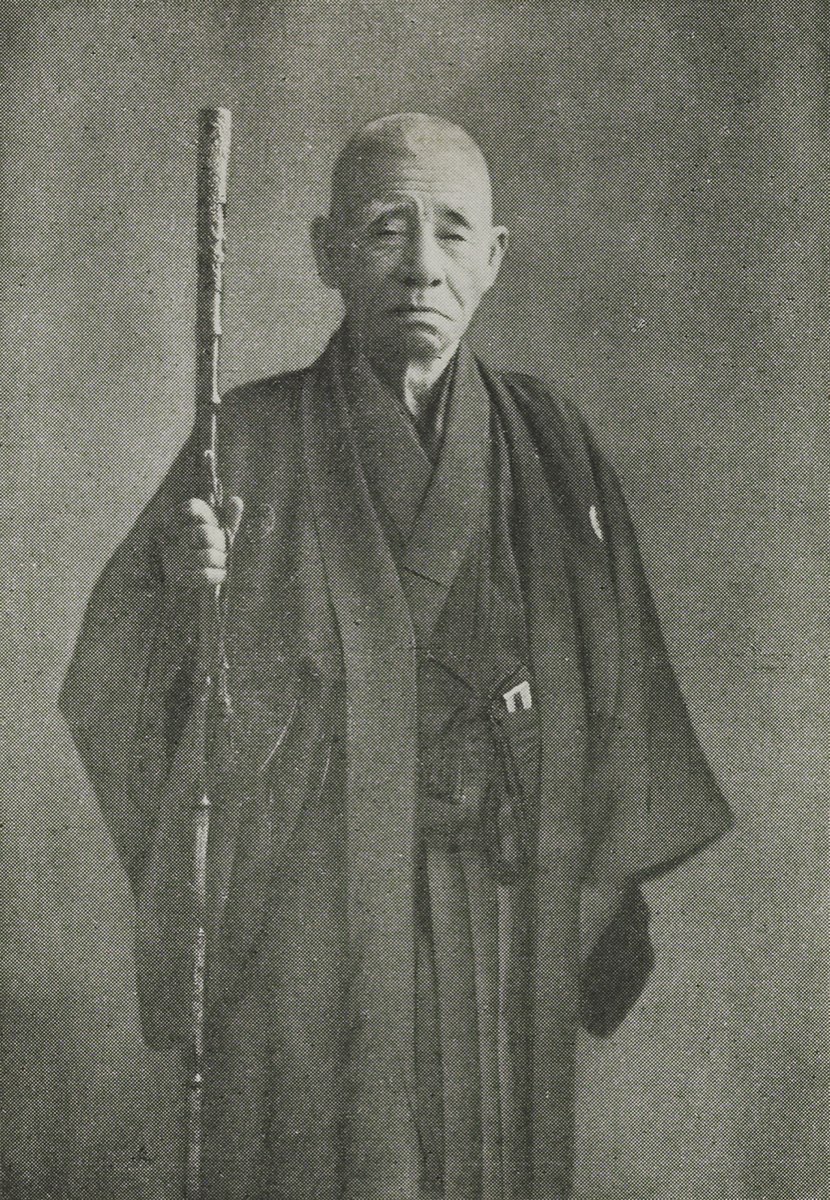
In 1893, on a small island in Toba Bay, Mikimoto Kōkichi found a half-round pearl that had grown inside an oyster he had prepared. Toba City records it as cultured pearl No. 1. Mie Prefecture describes his work as the world's first pearl cultivation, and it grew into an industry known around the world.
This article follows Mikimoto from a noodle shop in Toba to the title of "Pearl King," and looks at the people, places and patents behind cultured pearls.
A noodle-shop son in Toba
Mikimoto Kōkichi was born in 1858 in Toba, in Shima Province, now part of Mie Prefecture. According to Toba City, he was the eldest son of Awakō, a noodle shop that his family had run for generations. The National Diet Library notes that he helped in the family business while also trading in marine products.
The Japan Patent Office traces his first link with pearls to 1878. That year he went to Tokyo, hoping to make his name in business, and in Yokohama he saw pearls being bought and sold.
Pearls were already part of life on this coast. According to the Ise-Shima National Park regional council, the ama, traditionally female free divers, would occasionally find pearls in oysters while diving for seafood.
But natural pearls were rare. The Mikimoto company says that before cultivation, there was about one natural pearl in a thousand shells, if that.
A professor's remark
In 1888, according to Toba City, a Shima association for improving marine products, with Mikimoto as its representative, sent improved sea cucumber and pearls to a national fisheries exhibition in Tokyo and won a second prize. The Patent Office says that in the same year he began raising pearl oysters in Ago Bay.
In 1890 he exhibited pearls, akoya pearl oysters and articles made with pearls at the Third National Industrial Exhibition in Ueno, Tokyo. The Patent Office writes that the judge of his exhibits, Mitsukuri Kakichi, a professor at Tokyo Imperial University, told him that pearls might be cultivated by artificial means. That remark, it says, decided the course of his life.
Interpretations differ
Accounts of the next step differ on where it began. Mie Prefecture and the National Diet Library say that in 1890 he began raising akoya oysters and experimenting with cultured pearls in Ago Bay. Toba City dates the start of his half-round pearl experiments to September 1890 and places them on Ojima, an island in Toba Bay. The Patent Office, which dates his oyster farming in Ago Bay to 1888, also places the start of his pearl research in 1890.
The work was not easy. According to the regional council, most of his oysters were killed by a red tide, a mass growth of plankton, in 1892.
The first half-round pearl
On July 11, 1893, according to Toba City, Mikimoto found a half-round pearl in one of the oysters he had operated on at Ojima. The city calls it cultured pearl No. 1. Mie Prefecture and the National Diet Library add that he succeeded under the guidance of Mitsukuri Kakichi and others.
The Patent Office describes the result after four years of research. Lump-like, half-round pearls had formed on the inner surface of the shells of oysters he had raised.
Several bodies describe this as a world first. Mie Prefecture says that in 1893 Mikimoto began the world's first pearl cultivation in Toba, and the regional council calls it the world's first successful pearl-farming business. The Mikimoto company states that he was the first in the world to succeed in cultivating half-round pearls.
Mikimoto applied for a patent in 1894. Toba City records that patent No. 2670 was granted on January 27, 1896. The Patent Office notes that, although the half-round pearls were somewhat different from what people usually thought of as pearls, they were widely accepted as ornaments.
Round pearls and the question of credit
Interpretations differ
Mikimoto went on with research into cultivating round pearls. How round pearls were achieved, and who should be credited, is described differently in the sources.
Interpretations differ
Mie Prefecture and the National Diet Library say that a method for cultivating round pearls was invented by Mikimoto's son-in-law, Nishikawa Tōkichi, and others, and that a patent for it was obtained in 1908. Toba City records that on February 13, 1908, Mikimoto obtained patent No. 13673 for round pearls. The Patent Office says that he kept researching round pearls and obtained a patent in 1908, and that this invention helped pearl farming in Japan grow into an industry.
Toba City also records later steps. In 1918 Mikimoto obtained good results with round pearls by a method called zenmaki at his farm in Gokasho Bay. In 1919 he was granted a patent for it, and that year cultured round pearls were first sold at his London branch.
A shop in Tokyo and markets abroad
In 1899 Mikimoto opened a pearl shop in Tokyo, in the Kyōbashi district, on what Toba City identifies as today's Ginza Namiki-dōri. In 1900 he exhibited half-round pearls at the Paris Exposition for the first time.
A wholesale branch opened on New Bond Street in London in 1913. According to the National Diet Library, he went on to open shops abroad in London, New York and elsewhere, and showed Mikimoto pearls at expositions around the world.
Acceptance abroad was not automatic. Mie Prefecture writes that in 1921 a London newspaper carried an article claiming that the cultured pearls sold by Japanese pearl merchants were imitations of natural pearls. In Paris the matter went to a civil court, and the prefecture records that the case was won.
Mie Prefecture says that after this trial cultured pearls became widely accepted around the world, and that Mikimoto came to be called the "Pearl King." The Mikimoto company, which says it won the case, calls it the Paris pearl trial.
According to the National Diet Library, Mikimoto became a member of the House of Peers in 1938.
Ama, rafts and a pearl island
Cultured pearls depended on the sea and on the people who worked in it. The regional council explains that in the past the oysters were returned to the seafloor with the help of ama divers. Today they are kept in cages hung from rafts, and a pearl takes about two years to grow.
The sheltered inlets of the ria coast keep the water calm enough for the rafts. Mikimoto Pearl Island says that ama were once indispensable to pearl farming.
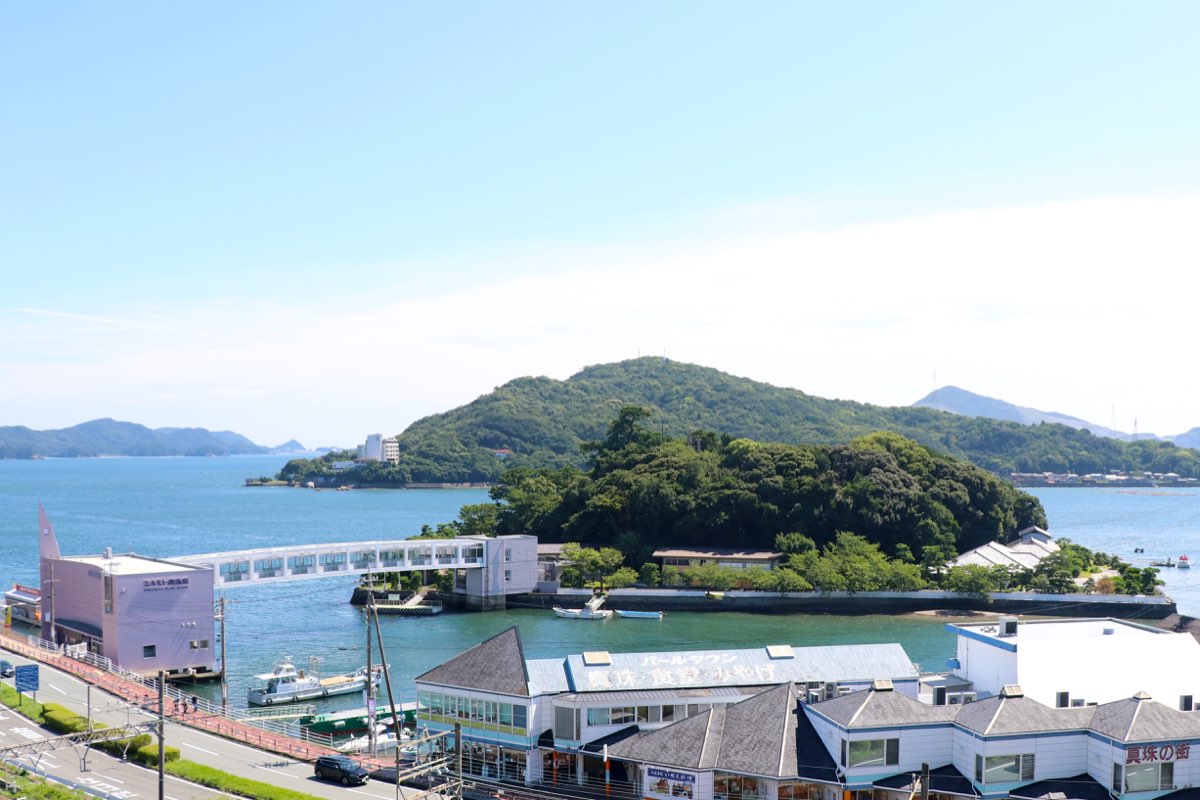
Ise-Shima National Park was designated on November 20, 1946. In 1951, according to Toba City, Ojima opened to the public as Mikimoto Shinju-ga-shima, a place where visitors could see how cultured pearls were made, watch the ama at work, and see pearls turned into necklaces.
Mikimoto died on September 21, 1954, at the age of 96. In 1985, when Japan's industrial property system marked its 100th anniversary, a centenary committee named him one of Japan's ten great inventors, for cultured pearls, according to the Japan Patent Office.
Places to visit
Mikimoto Pearl Island lies just off the Toba waterfront, on the island formerly called Ojima. It calls itself the birthplace of cultured pearls. Its Pearl Museum, which it describes as Japan's first museum devoted to pearls, explains how pearls form, how they are cultivated, and the history of cultured pearls in Japan.
The Kōkichi Mikimoto Memorial Hall on the island tells his life with photographs, objects and panels, including a reconstruction of his birthplace, the Awakō noodle shop. The island also holds demonstrations by ama divers in traditional white diving clothes, which it says can now be seen only there.
According to the regional council, the pearl rafts arranged on Toba Bay and nearby waters are a sight unique to the Ise-Shima region. Check the official website for opening hours and demonstration times before visiting.
Sources
- 鳥羽の観光史略年表(鳥羽市観光基本計画 資料編別冊)Toba City (鳥羽市)
- 偉人|みえ150年の歩みMie Prefecture
- 産業|みえ150年の歩みMie Prefecture
- 御木本幸吉|近代日本人の肖像National Diet Library
- 十大発明家(御木本幸吉 特許第2670号 養殖真珠)Japan Patent Office (特許庁)
- 伊勢志摩国立公園:伊勢志摩の真珠養殖Ise-Shima National Park regional council (伊勢志摩国立公園地域協議会; text in the Japan Tourism Agency multilingual commentary database)
- 鳥羽港鳥羽の真珠(海女とのつながり)Ise-Shima National Park regional council (伊勢志摩国立公園地域協議会; text in the Japan Tourism Agency multilingual commentary database)
- ブランドストーリーMIKIMOTO (株式会社ミキモト)
- ミキモト真珠島(トップ・博物館・記念館・海女時間)Mikimoto Pearl Island (株式会社御木本真珠島)