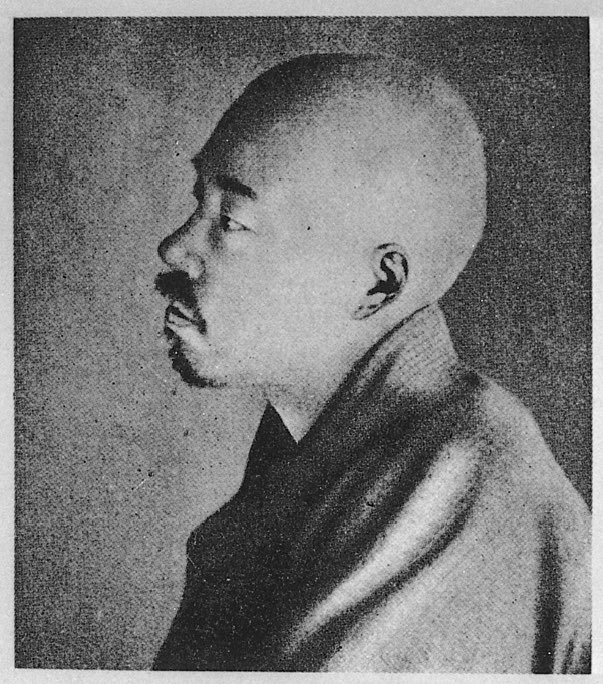
On April 9, 1895, a young English teacher from Tokyo named Natsume Kinnosuke arrived in Matsuyama to teach at the town's middle school. He would later become known as the novelist Natsume Sōseki. A few months later his close friend Masaoka Shiki, a poet born in Matsuyama, came home to recover from illness and moved into his lodgings.
The two lived together for 52 days in the house known as Gudabutsu-an. Matsuyama City describes it as the only place where Sōseki and Shiki ever lived together. This article follows their friendship from student days in Tokyo to that summer in Matsuyama, and what each went on to write.
Two students in Tokyo
Shiki was born in 1867 (the 17th day of the 9th month of Keiō 3 in the old calendar) in what is now Hanazono-machi in Matsuyama. According to the National Diet Library, his father was a samurai of the Matsuyama domain. In 1883 he moved to Tokyo, at first hoping to become a politician, but he soon turned to literature.
Sōseki, whose real name was Natsume Kinnosuke, was born the same year in Edo, in an area that is now part of Shinjuku in Tokyo. Shinjuku City's Natsume Sōseki Memorial Museum explains that he met Shiki at the First Higher Middle School, where Shiki introduced him to haiku, and that the two stayed close friends until Shiki's death.
According to Matsuyama City, they became friends at about the age of 21, bonding over a shared love of yose, the popular storytelling halls. Shiki wrote a collection of poetry and prose called Nanakusa-shū and asked Sōseki to comment on it.
In reply Sōseki wrote a travel account in classical Chinese, Bokusetsu-roku, and asked Shiki for his comments in turn. Amazed by his friend's skill in Chinese verse as well as English, Shiki came to regard him as a friend he deeply respected.
In May 1889 Shiki coughed up a large amount of blood and was diagnosed with tuberculosis. He wrote many haiku about the hototogisu, a cuckoo said to cry until it coughs blood, and from then on used the pen name Shiki, which means hototogisu.
Sōseki sent him haiku to cheer him up. Matsuyama City notes that these are the oldest surviving haiku by Sōseki.
Sōseki graduated in English literature from the Imperial University in 1893. Shiki left the university without graduating and in 1892 joined the newspaper Nippon. That same year he began a serial on haiku, Dassai Shooku Haiwa, which drew attention.
The summer of 1895
Sōseki came to Matsuyama to teach English at the Ehime Prefectural Ordinary Middle School, which Matsuyama City calls Matsuyama Middle School. A month after arriving, he wrote to a friend praising the Dōgo Onsen bathhouse, which had been rebuilt the year before.
Meanwhile, Shiki had gone to the Sino-Japanese War as a newspaper correspondent. On the ship home he coughed up a great deal of blood.
After treatment in Kobe and Suma, he returned to Matsuyama in August. According to a symposium notice from Ehime University, he no longer had a family home there, so he spent 52 days in Sōseki's lodgings.
The lodgings were called Gudabutsu-an, after Gudabutsu, Sōseki's haiku name. In one of his haiku, Sōseki writes that Gudabutsu is the name of the master of the house.
Fifty-two days at Gudabutsu-an
According to Matsuyama City, Shiki held haiku gatherings day after day with members of Shōfūkai, a local haiku society. The city calls it the first regional society of Shiki's school in Japan, and says its first members were teachers at Matsuyama Higher Elementary School. Before long Sōseki joined the circle and began to learn haiku from Shiki in earnest.
The two also spent quieter days together. They walked around Dōgo and watched kyōgen comic plays at a theater in Ōkaidō, and Sōseki went to the hot spring at Dōgo with Shiki and with Shiki's disciple Takahama Kyoshi.
During this stay Shiki began writing Haikai Taiyō, a guide to haiku that opens with the line that haiku is a part of literature. The National Diet Library dates its serialization from 1895 and its publication as a book to 1899. Matsuyama City adds that the two are said to have vowed together to create a new Japanese literature.
Matsuyama City sees this summer as a turning point for Sōseki. In its words, the talks on literature and the haiku the friends exchanged on their walks became the starting point for the English teacher Natsume Kinnosuke to become the great writer Natsume Sōseki. When Shiki left for Tokyo after 52 days, Sōseki gave him a farewell haiku wishing him a safe journey.
After Matsuyama
Back in Tokyo, Shiki was diagnosed with spinal caries, a tuberculosis infection of the spine, and spent his remaining years largely in bed. Even so, his literary work grew more active. In 1896 he left more than 3,000 haiku, and in 1898 he published Letters to a Tanka Poet, which began his reform of tanka poetry.
Shiki promoted shasei, "sketching from life," an idea he took from Western painting, and according to Matsuyama City his new style of haiku spread across Japan, especially among young people. He also guided the haiku magazine Hototogisu, founded by his Matsuyama friend Yanagihara Kyokudō.
Sōseki left Matsuyama in April 1896, a year after his arrival, to teach at the Fifth Higher School in Kumamoto. There he kept writing haiku as a poet of Shiki's school. In 1900 the Ministry of Education sent him to Britain for two years to study English, and from there he wrote long letters to his sick friend.
In November 1901 Shiki wrote back, confiding to Sōseki that he was finished and that living had become painful. Shiki died of spinal caries on September 19, 1902, at the age of 34. Sōseki heard the news in Britain and wrote haiku in mourning.
After returning to Japan, Sōseki began writing I Am a Cat on the advice of Takahama Kyoshi, and its success started his career as a writer. In 1906, again urged by Kyoshi, he published Botchan in Hototogisu.
The novel is set in a town resembling Matsuyama, and the hot spring in the story is said to be Dōgo Onsen. Sōseki joined the Tokyo Asahi newspaper as a staff writer in 1907 and died in 1916 at the age of 49.
Places to visit
The Matsuyama Municipal Shiki Memorial Museum stands in Dōgo Park. Its permanent exhibition follows Shiki's life under the theme "Shiki the person," with sections that include the two great writers, Botchan and Matsuyama, and Shiki and baseball.
The third-floor gallery has a reconstruction of the ground floor of Gudabutsu-an. Check the museum's official website for opening times and fees.
The original house was lost in the war. A reconstruction built in 1982 behind the Bansuisō, at the foot of Castle Hill, collapsed in heavy rain in July 2010. Matsuyama City rebuilt it on the former pool site of Banchō Elementary School, the school Shiki, Kyokudō and Kyoshi attended, and it opened on July 24, 2026.
The two-story wooden house aims to recreate the original as closely as possible, and a guidance building beside it has exhibits on Sōseki and Shiki. Check the official website before visiting.
Sources
- 夏目漱石と『坊っちゃん』Matsuyama City
- 正岡子規についてMatsuyama Municipal Shiki Memorial Museum
- 正岡子規|近代日本人の肖像National Diet Library
- 漱石の生涯(新宿区立漱石山房記念館)Shinjuku City Natsume Sōseki Memorial Museum (新宿区立漱石山房記念館)
- 展示紹介(松山市立子規記念博物館)Matsuyama Municipal Shiki Memorial Museum (松山市立子規記念博物館)
- 子規・漱石生誕150年記念事業 実施報告書(P4-5)Matsuyama City (文化・ことば課)
- 『愚陀佛庵』の再建について(整備方針案)Matsuyama City
- 『愚陀佛庵』の再建Matsuyama City (文化・ことば課)
- 愚陀仏庵再建記念シンポジウム<愚陀仏庵時代>の子規と漱石(案内)Ehime University Research Center for Haiku and Calligraphy Culture (愛媛大学俳句・書文化研究センター)
- 愚陀佛庵 公式サイトGudabutsu-an (Matsuyama City facility; designated manager コンソーシアム番町)