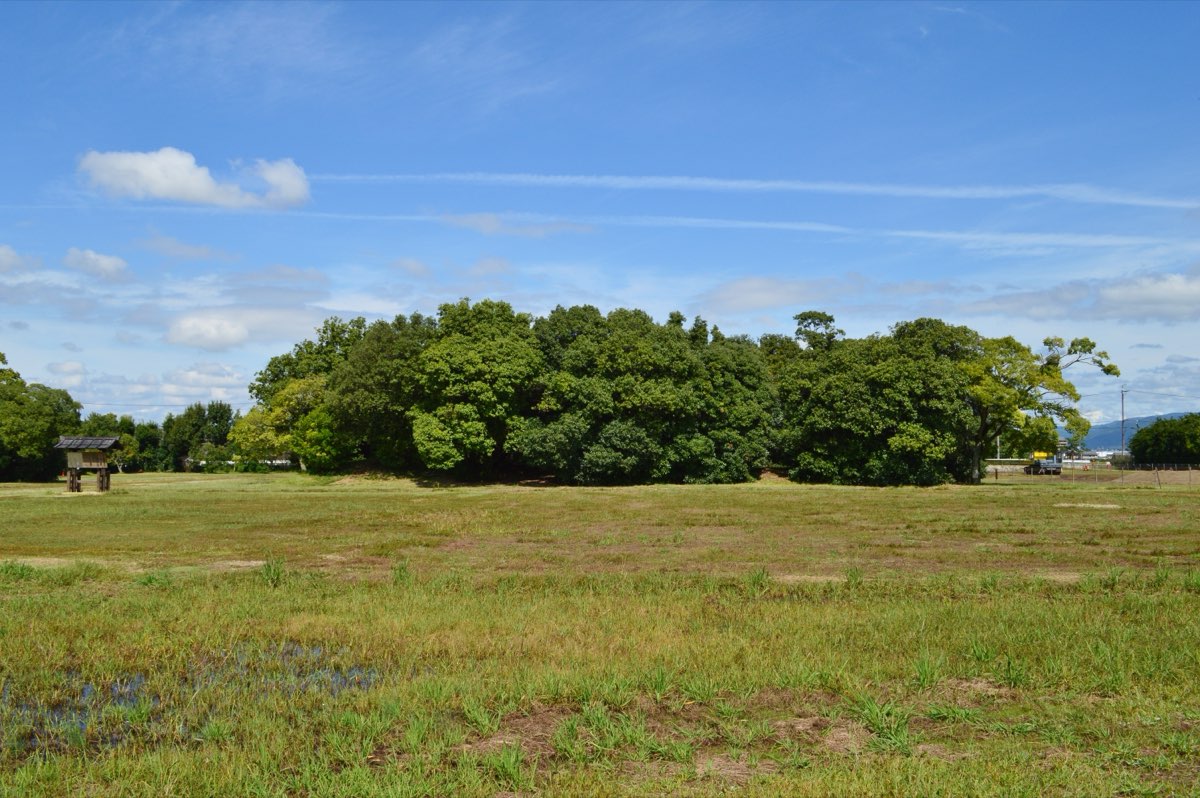
In the southern part of the Nara basin lie two neighboring areas: Asuka, a small basin ringed by hills, and Fujiwara, the plain just to its north-west. Between the late 6th and early 8th centuries, the rulers of the Japanese archipelago built their palaces, temples and tombs here.
On July 26, 2026, the World Heritage Committee, meeting in Busan, Korea, inscribed the "Ancient Capitals of Asuka and Fujiwara" on the World Heritage List. The property has 19 components and is Japan's 27th World Heritage property. According to the Agency for Cultural Affairs, these sites show how a centralized state was first born and established in the Japanese archipelago, through the change from one capital to the next.
The age of Asuka
The local World Heritage council dates the Asuka period from 592, when Empress Suiko took the throne at the Toyura Palace in Asuka, to the move of the capital to Heijō-kyō in 710, about 120 years. In this period, the council writes, the country of "Japan" took shape through missions to the Sui court in China, the Seventeen-Article Constitution, and a series of political reforms.
Earlier rulers had moved their palace with each new reign. From 630, when Emperor Jomei built the Okamoto Palace, palaces stayed in one place in Asuka. The Asuka Palace Site holds the remains of four palaces built there one after another during the 7th century.
Excavations show that these palaces combined spaces for state ceremony and government with the ruler's private residence. Government offices were spread around the palace rather than gathered inside it. All the palace buildings in Asuka used posts set directly in the ground.
Around the palace stood facilities that showed the growing power of the state. The Asuka Pond Garden Site is a garden made in the mid-7th century and used until the Asuka Kiyomihara Palace (672–694).
The council sees it as the earliest example of the gardens that led to later Japanese gardens. The Asuka Water Clock Site, built in 660, is described by the council as the remains of Japan's oldest water clock tower.
Asukadera and the arrival of Buddhism
Buddhism is believed to have reached Japan in the mid-6th century. In 587 Soga no Umako vowed to build a temple, and construction began at Asuka in 588.
According to the Nara National Research Institute for Cultural Properties, people and technicians from the Korean kingdom of Baekje played the central role. The temple, Asukadera, was completed in 596.
The institute calls Asukadera the first full-scale Buddhist temple built in Japan. Excavations in 1956 and 1957 revealed a pagoda surrounded on three sides by three main halls, a layout unknown elsewhere in Japan, though similar layouts are known from temple sites of the old Korean kingdom of Goguryeo. The main image of the central hall survives as today's Asuka Daibutsu.
Objects buried under the pagoda included beads, gold and silver rings, armor and other items that the Asuka Historical Museum compares to grave goods from tombs of the same time. The museum takes this as a sign of the period when Buddhism was beginning to spread among the powerful clans while tombs were still being built.
The council stresses that temples brought far more than religion. With them came Chinese characters, needed for the sutras, and new skills in civil engineering, building, surveying, tile making and metalwork.
This knowledge from China and the Korean peninsula became a foundation for building the state. Unlike the palaces, the temples were tiled buildings on stone foundations.
Other temples followed. The council explains that after Asukadera, powerful clans built their own temples, such as Yamadadera, and that state temples were later established to protect the nation. At Kawaradera, built in the mid-7th century by Emperor Tenji for his late mother, Empress Saimei, the unit of measure used for its buildings and the clay tile Buddhas that decorated its halls show strong influence from Tang China.
Fujiwara-kyō, a capital on a grid
According to Kashihara City, work on a new capital began in 676 under Emperor Tenmu. The council explains that the Asuka basin had become too cramped. In 694 Empress Jitō moved the court from the Asuka Kiyomihara Palace to the Fujiwara Palace.
Fujiwara-kyō was the capital under three rulers, Jitō, Monmu and Genmei, from 694 until the move to Heijō-kyō in 710. Kashihara City calls it Japan's first full-scale capital laid out on a Chinese-style grid of streets. The palace measured about one kilometer on each side, and the city about five kilometers on each side.
The palace was placed near the center of the Yamato Three Mountains, which Kashihara City says were regarded as sacred guardians of the palace. Inside its walls stood the emperor's residence, the Daigokuden (Great Hall of State), halls for ceremonies and the offices of government. The council notes that the palace was the first to use Chinese-style tiled buildings on stone foundations, and that gathering the offices into one palace shows that a centralized system had been established.
Two state temples, Daikandaiji and Motoyakushiji, were placed in the city south of the palace. Tombs were laid out to the south as well. The Mounded Tomb of Emperor Tenmu and Empress Jitō lies due south of the palace, on the line of its central axis (Suzaku Avenue), showing that tomb and palace were planned together.
The council describes the year 701 as the moment when, in the new capital, the system of government was complete and the state of "Japan" was formed; it was the year the Taihō Code was completed. The plan of Fujiwara-kyō became a model for the later capitals of Heijō-kyō and Heian-kyō. When the court left in 710, the main buildings were taken down and moved, and the Daigokuden of Heijō Palace is said to have come from Fujiwara.
For centuries the palace's exact location was a puzzle. Excavations from 1934 settled the question, and the site became a Historic Site in 1946 and a Special Historic Site in 1952. During the long years of uncertainty, the platform of the Daigokuden survived as the sacred grove of a local shrine.
Tombs: from great mounds to octagons
The council explains that the tombs in the property trace a change: from the keyhole-shaped mounds of an earlier coalition of powerful clans to the burial system of a centralized state with the emperor at its head. The Ishibutai Mounded Tomb is a square mound about 50 meters on each side; the upper part of the mound has been lost, leaving the huge ceiling stones of its stone chamber exposed.
Interpretations differ
One theory identifies Ishibutai as the tomb of Soga no Umako, who died in 626, recorded in the Nihon Shoki as the Momohara tomb.
The octagonal Kengoshizuka Mounded Tomb of the late 7th century represents a new shape that, according to the council, was created in Japan in place of square mounds, drawing on Chinese ideas of the cosmos.
The Takamatsuzuka Mounded Tomb, a round mound about 23 meters across, dates from the late 7th to early 8th century. In March 1972, excavators found its painted stone chamber, with a star chart on the ceiling and the Four Guardian creatures and groups of men and women on the walls.
The discovery set off a nationwide boom of interest in Asuka and archaeology. The nearby Kitora Mounded Tomb, the council says, preserves the oldest surviving astronomical chart in East Asia.
A World Heritage property
ICOMOS, the advisory body, recommended inscription on June 6, 2026. The World Heritage Committee inscribed the property under two criteria: its evidence of exchange with China and the Korean peninsula and of the arrival of Buddhism, and its evidence of how an ancient East Asian capital based on a centralized system took shape. The committee also asked Japan to continue research on conserving the murals removed from Kitora and Takamatsuzuka and on returning them to their original place.
Places to visit
The 19 components are spread across Kashihara, Sakurai and Asuka Village. The council's visitor page maps them and suggests routes by bus from Kintetsu Asuka and Sakurai stations. According to Kashihara City, from the Fujiwara Palace Site you can still see the Yamato Three Mountains on three sides.
To learn more, the council lists museums including the Asuka Historical Museum, which displays the excavated east corridor of Yamadadera; the Fujiwara Palace Site Exhibition Room of the Nara National Research Institute for Cultural Properties; the Kitora Tumulus Mural Experiential Museum Shijin no Yakata, which houses the Agency for Cultural Affairs facility that conserves the Kitora murals; and the Takamatsuzuka Mural Hall, with replicas of the murals as found. Check each facility's official website for opening days and hours.
Sources
- 「飛鳥・藤原の宮都」に係る世界遺産委員会決議について(報道発表、令和8年7月26日)Agency for Cultural Affairs
- 「飛鳥・藤原の宮都」に係る世界遺産委員会決議についてお知らせします(概要)(第二報、別添1〜3と資料を含むPDF)Agency for Cultural Affairs (文化庁)
- 奈良県の世界遺産Nara Prefecture
- 構成資産の紹介(世界遺産「飛鳥・藤原の宮都」)Asuka-Fujiwara World Heritage Council
- Introduction of Component Parts (About Asuka-Fujiwara)Ancient Capitals of Asuka and Fujiwara Council
- 「飛鳥・藤原」を知るAncient Capitals of Asuka and Fujiwara Council (世界遺産「飛鳥・藤原」協議会)
- 世界遺産を知る(世界遺産を目指して)Ancient Capitals of Asuka and Fujiwara Council (世界遺産「飛鳥・藤原」協議会)
- 「飛鳥・藤原」を訪れるAncient Capitals of Asuka and Fujiwara Council (世界遺産「飛鳥・藤原」協議会)
- 飛鳥寺西門地区の調査 現地説明会資料(1996年10月5日)Nara National Research Institute for Cultural Properties
- 飛鳥資料館のみどころ(12) 展示品解説 その4「飛鳥寺の塔の埋納物」Asuka Historical Museum, Nara National Research Institute for Cultural Properties
- 藤原宮跡Kashihara City (entry in Nara Prefecture's heritage database いかす・なら)
- 藤原宮跡Agency for Cultural Affairs (Cultural Heritage Online)
- 国宝高松塚古墳壁画保存管理の経緯(昭和47年〜平成18年9月)Agency for Cultural Affairs
- 夏期企画展 第13回写真コンテスト「高松塚古墳」(ぶんかる 文化財のトビラ097)Agency for Cultural Affairs (author: Hamamura Mio, Asuka Historical Museum)