In northern Kyushu, the ancient state placed two institutions that worked together. Dazaifu, inland in today's Dazaifu City, was a government office that governed Kyushu and handled foreign relations. Kōrokan, on a hill above Hakata Bay in today's Fukuoka City, was the guesthouse where foreign visitors arrived and Japanese envoys set out.
This article looks at both: the office and its defences, built after a defeat on the Korean Peninsula in 663, and the guesthouse that turned from a stage for diplomacy into a place of trade. It ends with how both sites were rediscovered by excavation.
A government office for the western provinces
According to Dazaifu City, Dazaifu held control of diplomacy under the ancient state's legal system and also governed the provinces of Saikaidō, the "Western Sea Circuit" of nine provinces and two islands that made up ancient Kyushu. The Kyushu Historical Museum, a Fukuoka Prefecture museum, describes its main duties in the Nara and Heian periods as diplomacy and military affairs.
The heart of Dazaifu was its central government compound, whose remains are known as Tofurō-ato. According to the museum, it was where the head of Dazaifu carried out government business and ceremonies. Its symmetrical, tile-roofed buildings on stone foundations followed the layout of the Heijō Palace in Nara, and the compound was enclosed by walls and roofed corridors.
Excavation has shown three main phases of building. The first, in the second half of the seventh century, consisted of buildings with posts set directly in the ground. Early in the eighth century these were replaced by buildings on stone foundations.
After the compound was burned in 941 during the rebellion of Fujiwara no Sumitomo, it was rebuilt at almost the same scale. Dazaifu City states that the compound is thought to have lost its function in the later eleventh century, leaving only the foundation stones seen today.
Defences after the Battle of Baekgang
The defences around Dazaifu go back to a war. According to the Kyushu Historical Museum, Wa (Japan) sent forces to the Korean Peninsula to help restore the kingdom of Baekje, and in 663 they were defeated by the allied forces of Tang China and Silla at the Battle of Baekgang. The Agency for Cultural Affairs explains that after this battle the earthwork of Mizuki and the mountain castles of Ōno and Kii were built, strengthening the defences of Dazaifu.
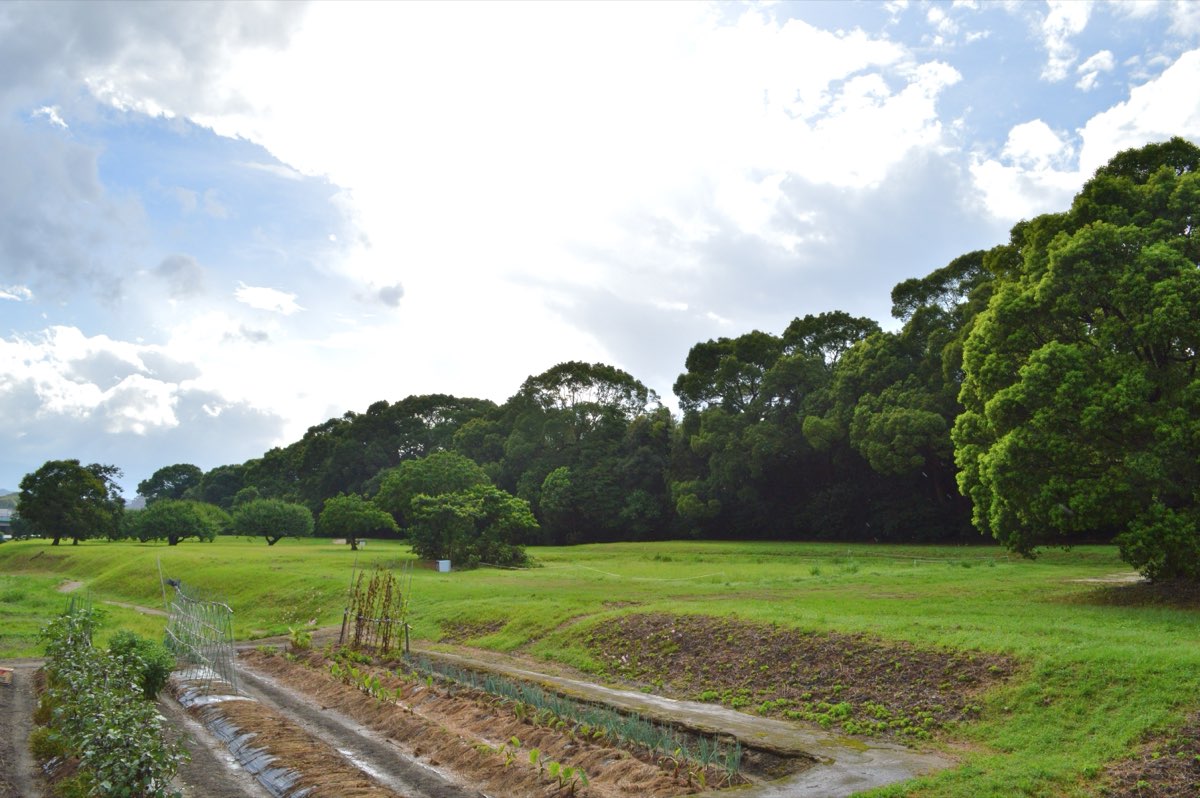
The Nihon shoki (Chronicles of Japan) records under the year 664 that a great embankment was built in Tsukushi to hold water and was named Mizuki. Its main earthwork, about 1.2 kilometers long, was built across the point where the plain between Hakata Bay and Dazaifu is narrowest. It had gates at its eastern and western ends and a wide moat on the Hakata Bay side.
Interpretations differ
How Mizuki actually held water is not settled. The Kyushu Historical Museum states that the outer moat on the Hakata side held water, but the Agency for Cultural Affairs notes that there are differing views on how Mizuki stored water, so interpretations differ.
Excavation has shown that an official road passed through the western gate, leading from the guesthouse known as Tsukushi no Murotsumi, later called Kōrokan. Smaller earthworks were also built farther west to block the ends of ridges, which the museum takes as a sign that the defences covered a wide area.
The Nihon shoki also records that in the following year, Ōno and Kii castles were built under the direction of the Baekje officials Okurai Fukuru and Shihi Fukubu. Ōno Castle stood on a mountain 410 meters above sea level, behind the government compound. Earthen walls along the ridges and stone walls across the valleys formed a circuit of about 8 kilometers, and more than 70 buildings on stone foundations, thought to be storehouses, have been found inside.
Kōrokan, a guesthouse on Hakata Bay
According to the City of Fukuoka, Kōrokan was a state guesthouse that served as Japan's front door from the late Asuka period to the late Heian period. It was developed as the diplomatic window of Dazaifu. Before it took the name Kōrokan in the Heian period, it was called Tsukushi no Murotsumi.
The name comes from the Honglu Si, the office that handled relations with foreign countries in ancient China. Kōrokan were set up in three places, at Heian-kyō, Naniwa and Tsukushi, but the Fukuoka site is the only one whose remains have been confirmed.
The guesthouse did more than receive envoys from Tang and Silla. It was also where Japanese envoys to Tang and Silla, and monks going abroad to study, made their final preparations for the voyage.
The Fukuoka site had a northern and a southern compound on either side of a valley. According to the city, the east gate of the northern compound was the first gate that people arriving in Japan passed through, and the place from which envoys to Tang were sent off.
From diplomacy to trade, and on to Hakata
Over time, the city explains, opportunities for diplomacy decreased, and merchants from Tang and Silla became the main visitors to Kōrokan, which turned into a place of trade. Excavations have found large amounts of roof tiles together with Chinese ceramics such as Yue celadon, Changsha ware and Xing white porcelain, as well as Islamic pottery and West Asian glass. The city calls Kōrokan the largest base of international exchange in ancient Japan until trade moved to Hakata.
According to the Fukuoka City Museum, the stage for foreign exchange moved from Kōrokan to Hakata in the mid-eleventh century. People from Song China built a Chinese quarter there called Tōbō and traded actively.
In 2024 a stone-built structure found in Hakata was designated a national Historic Site. Dating from the late eleventh to the early twelfth century and confirmed over about 70 meters, it is thought to have been a harbor facility. The City of Fukuoka connects it with Tōbō, the new trading base that replaced Kōrokan, and notes finds of trade ceramics and of sulfur, a major export in trade with Song China.
Rediscovering the two sites
The Dazaifu remains were designated a Historic Site in 1921 and a Special Historic Site in 1953. The Kyushu Historical Museum has carried out excavation and research on the Dazaifu sites continuously since 1968. In 2015, Dazaifu and related cultural properties were recognized as Japan Heritage under a title meaning "Ancient Japan's Western Capital: a base for exchange with East Asia."
The location of Kōrokan was long debated. A Kyushu University professor proposed Fukuzaki, inside the later Fukuoka Castle, based on the Man'yōshū poetry anthology, old maps and excavated tiles, and this became the accepted view.
In December 1987, an excavation during renovation of the Heiwadai baseball stadium found remains related to Kōrokan and proved him right. The site became a national Historic Site in 2004, and because Fukuoka Castle is one too, the city notes that the area is a rare case of double designation.
Places to visit
The site of the Dazaifu government compound has been laid out as a historic park, with the building plans marked on the ground according to excavation results, and it is open to the public. Nearby is Kanzeonji, a temple that Emperor Tenji vowed to build for his mother, Empress Saimei, who died in Tsukushi in 661; it was completed in 746, and its temple bell is a National Treasure.
The Mizuki earthwork now forms a green belt used by local residents, and at Ōno Castle walking trails let visitors see stone walls, earthworks and building foundations up close.
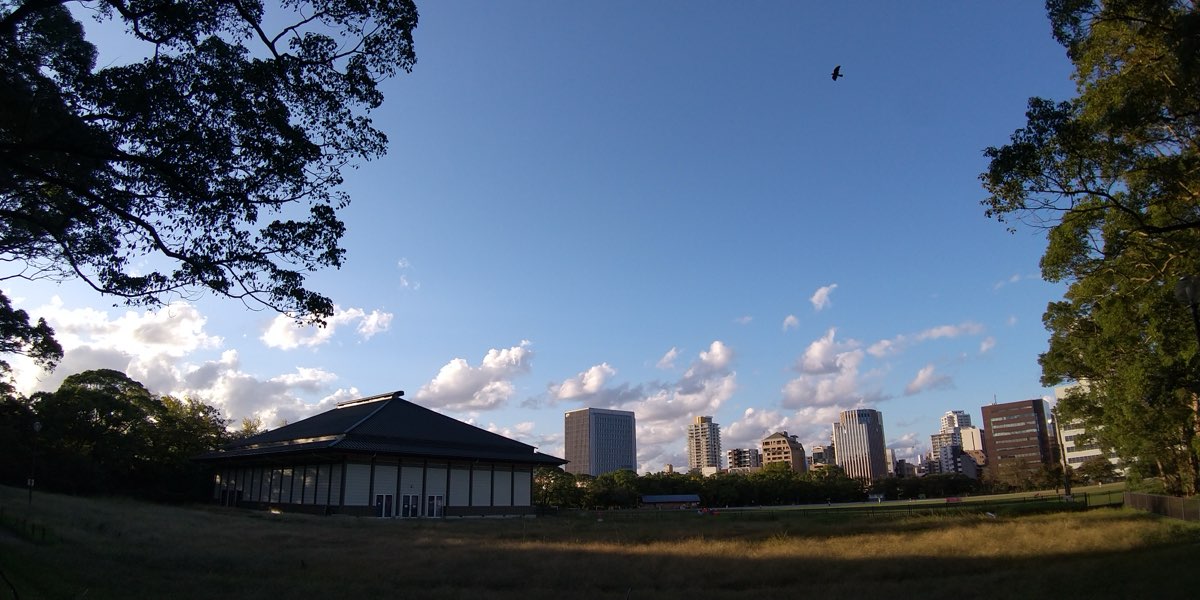
In Fukuoka City, the Kōrokan site lies in Maizuru Park, where the site exhibition hall is used to display some of the excavated finds. The hall closed for exhibition renovation works on 1 October 2026, and as of September 2026 the city planned to reopen it in late March 2027. The city completed the reconstructed east gate of the northern compound and opened it to the public on 17 October 2026 for a limited period ending on 8 November 2026, after which it said the area would close again for surrounding works. Check the official websites for the current situation and opening hours before visiting.
Sources
- 市内の指定文化財 史跡Dazaifu City
- 大宰府跡Agency for Cultural Affairs (Cultural Heritage Online)
- 大宰府史跡紹介Kyushu Historical Museum (Fukuoka Prefecture)
- 水城跡Agency for Cultural Affairs (Cultural Heritage Online)
- 鴻臚館跡Fukuoka City (Fukuoka City Cultural Properties)
- 鴻臚館 北館東門 工事途中の様子を特別公開します(令和8年4月24日 報道発表資料・参考資料)Fukuoka City (Economy, Tourism and Culture Bureau, Historic Site Development and Utilization Section)
- 鴻臚館 北館東門 特別公開しますFukuoka City (Economy, Tourism and Culture Bureau, Cultural Properties Utilization Section)
- 鴻臚館跡展示館 一時休館のお知らせFukuoka City (Economy, Tourism and Culture Bureau, Cultural Properties Utilization Section)
- 常設展示Fukuoka City Museum
- 中世の国際貿易都市博多の起点となった港湾施設 ―国史跡「博多遺跡」の指定について―Fukuoka City (Buried Cultural Properties Division)
- 博多遺跡Agency for Cultural Affairs (Cultural Heritage Online)