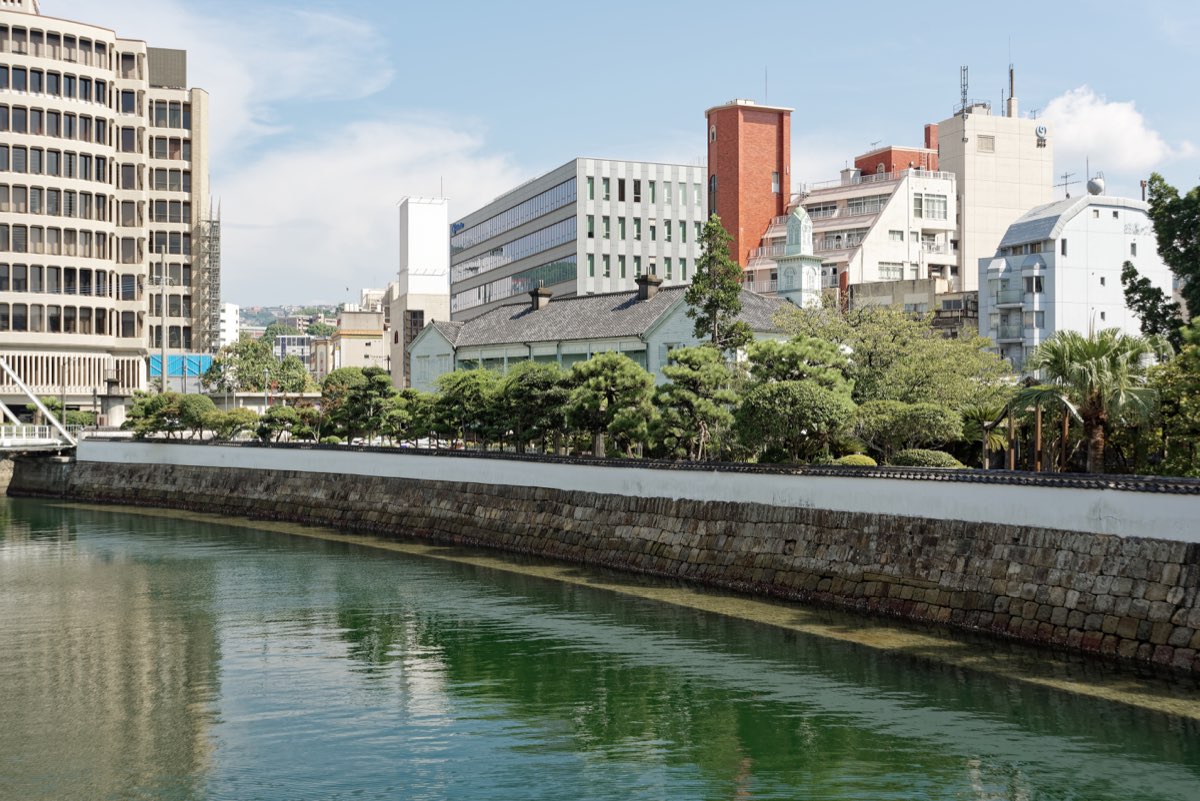
In the harbor of Nagasaki there once stood a fan-shaped island built by human hands. For about 218 years, from 1641 until the Dutch trading post closed in 1859, Nagasaki City describes Dejima as Japan's only window open to Western Europe.
This article follows why Dejima was built, how the Dutch lived and traded there, and how the island vanished and is now being rebuilt.
Portuguese ships and a new port
After firearms reached Japan through Tanegashima in 1543 and Christianity arrived in 1549, regional lords began to seek visits from Portuguese ships, for trade and for the faith. The Portuguese brought raw silk, silk fabrics, woolen cloth, sugar and other goods, and took away mainly silver.
In 1550 a Portuguese ship entered the port of Hirado. According to Nagasaki City, it was the first European trading ship to enter a port in what is now Nagasaki Prefecture. The Portuguese then moved their base from port to port, to Yokoseura, Fukuda and Kuchinotsu.
In 1570 the local lord Ōmura Sumitada designated Nagasaki as a port of call for Portuguese ships. In 1571 a Portuguese ship and a Chinese ship chartered by the Portuguese entered the harbor, and around this time the first six town wards were laid out.
Sumitada later donated the town to the Jesuits, and it became church land. According to the Nagasaki Museum of History and Culture, Nagasaki came to be called a "Little Rome."
In 1587 Toyotomi Hideyoshi issued an edict expelling missionaries, and he later took Nagasaki under his direct control. The Tokugawa shogunate banned Christianity in its own lands in 1612 and throughout the country in 1613, and enforcement grew steadily stricter.
An island built for the Portuguese
To stop the spread of Christianity, the shogunate decided to gather the Portuguese, who were then living scattered through the town, on an island. Work began in 1634, and Dejima was completed in 1636. It was paid for jointly by 25 leading Nagasaki merchants, known as the "Dejima merchants."
From its shape the island was also called Ōgishima, "fan island." The official Dejima site notes that the idea of building an island in the sea, the people who designed and supervised the work, and the details of the engineering are still unknown.
The Portuguese did not stay long. After the Shimabara uprising of 1637, the shogunate grew more wary of Portugal, and in 1639 the Portuguese were banned from coming to Japan. The new island stood empty.
The Dutch move from Hirado
Japan's contact with the Netherlands began in 1600, when the Dutch ship De Liefde drifted ashore in Bungo, in present-day Ōita Prefecture. In 1609 two Dutch ships came to Japan, and with the shogunate's permission a Dutch trading post opened at Hirado. An English trading post also operated there from 1613 to 1623.
In 1640 the shogunate's inspector Inoue Masashige ordered the Hirado buildings torn down, because a warehouse built in 1639 bore a date in the Western calendar, counted from the birth of Christ.
The move to Dejima took place on the 17th day of the 5th month of Kan'ei 18 (lunar calendar), which Nagasaki City gives as 25 June 1641 from the diary of the trading-post chief Maximiliaan Le Maire. The Dutch arrived at sunrise, chose their rooms, asked the 25 Dejima merchants who owned the buildings to repair them, and in the afternoon paid their respects at the magistrate's office.
Life and trade on the island
The Dutch merchants were kept within Dejima, and they were not free to come and go. A guard at the front gate checked people going in and out, and on the Japanese side Dejima officials called otona, chosen from the Dejima merchants, handled trade business and management.
The largest building was the residence and office of the trading-post chief, known in Japan as the Kapitan. It was also used to entertain Japanese officials and lords who visited the island.
From 1641 the shogunate also required the Dutch to report news about missionaries and Catholic powers such as Portugal. Interpreters translated what the chief told them, and these reports, called fūsetsugaki, are said to have been sent to Edo.
More than 700 Dutch ships came to Japan in the 227 years from 1621 to 1847. Most sailed from Batavia, present-day Jakarta, arriving in the 6th or 7th lunar month.
In the early Edo period the main import was raw silk and the main export silver. From the mid-Edo period the Dutch brought woolen cloth, velvet, pepper, sugar, glassware and books, and took away copper, camphor, ceramics and lacquerware.
The shogunate gradually tightened its limits on this trade. In 1715 it allowed two Dutch ships a year, and in 1790 only one. The Dutch East India Company itself was dissolved in 1799.
Knowledge also came through Dejima. According to the National Diet Library, the shogunate in 1720 eased the import of books unrelated to Christianity, and Dutch translations of Western scientific works began to arrive. Interest in "Dutch learning" grew, and in 1774 Kaitai shinsho, a Japanese translation of a European anatomy book, was published.
Where did the word "sakoku" come from?
The official Dejima site calls the shogunate's orders of the 1630s the "sakoku" edicts and treats the move of the Dutch in 1641 as the completion of the "sakoku" system.
The word itself is later. The German physician Engelbert Kaempfer came to Dejima in 1690 as the trading post's doctor.
In 1801 the Nagasaki interpreter Shizuki Tadao translated an essay from Kaempfer's book on Japan and titled it Sakokuron, which the National Diet Library's English pages render as "Discussion of the Closed Country." The National Diet Library calls this the birth of the translated word "sakoku."
Interpretations differ
Historians do not all describe the period in the same way. One historian, a professor emeritus of Rikkyo University, has argued since 1983 that Japan did not literally lock itself away. In this view, Japan limited its relations with Europe to the Netherlands but kept relations with neighboring countries and regions through "four gates," and the paired idea of "sakoku" and "opening the country" took root only after the 1890s.
The Chinese quarter
Dejima was not Nagasaki's only foreign quarter. From 1635 Chinese ships were allowed to call only at Nagasaki, and Chinese visitors lodged in houses across the town.
As trade was restricted, smuggling became a problem. Worried about smuggling and the spread of Christianity, the shogunate built a walled compound surrounded by moats on the site of an official herb garden, completed in 1689.
The Tōjin yashiki, or Chinese quarter, covered about 9,400 tsubo and could house around 2,000 people at a time. At that time "Tōjin" meant visitors from China and other parts of East and Southeast Asia.
After a fire in 1698 destroyed goods stored in the town, a storehouse island called Shinchi was built. It is now Nagasaki's Shinchi Chinatown.
The end of the trading post and the island's return
In 1859 the Dutch trading post was abolished and replaced by a consulate, and in 1866 Dejima became part of the foreign settlement.
A river diversion begun in 1885 cut away about 18 meters of Dejima's north side, and harbor works completed in 1904 made the fan-shaped island disappear entirely.
Dejima was designated a national Historic Site in 1922. Nagasaki City began planning in fiscal 1951 and started full-scale restoration in fiscal 1996.
Groups of rebuilt buildings were completed in 2000, 2006 and 2016, showing the island as it looked around 1820, and the Omotemon Bridge was built across the river in 2017. The long-term goal is to restore the fan-shaped island with water on all four sides.
Places to visit
Dejima (national Historic Site, Nagasaki City).* Rebuilt warehouses, residences and the Kapitan's quarters. The site is open every day of the year, a short walk from the Dejima tram stop; check the official site for hours and fees.
Nagasaki Museum of History and Culture.* Its permanent galleries cover Dejima and Dutch learning, and include a model of the Tōjin yashiki. Part of the Nagasaki magistrate's office has been reconstructed on the museum grounds.
Hirado Dutch Trading Post, Hirado.* The site of the earlier trading post is a national Historic Site, and the warehouse of 1639 was rebuilt in 2011.
Sources
- 出島の歴史Nagasaki City (Dejima official site)
- 平戸から出島へお引っ越し(ナガジン)Nagasaki City (Nagazine)
- 長崎開港450周年記念展 ーふたつの開港ーNagasaki Museum of History and Culture
- 平戸オランダ商館の歴史Hirado Dutch Trading Post (Official site)
- 唐人屋敷の歴史Nagasaki City
- 学芸員コラム Vol.15Nagasaki City (Nagasaki Studies Institute)
- 復元整備事業 ― 新しい出島の誕生 ―Nagasaki City (Dejima official site, operated by the Dejima management office as designated manager)
- 建物の紹介Nagasaki City (Dejima official site, operated by the Dejima management office as designated manager)
- ご利用情報Nagasaki City (Dejima official site, operated by the Dejima management office as designated manager)
- 歴史探訪【出島跡】Nagasaki Customs (Ministry of Finance)
- オランダを通して世界をのぞく(電子展示会「知識を世界に求めて―明治維新前後の翻訳事情―」)National Diet Library
- Part 2: View by Topics (Japan-Netherlands Exchange in the Edo Period)National Diet Library
- 近世的国際関係の再編と鎖国・開国言説(第16回国際日本学シンポジウム 報告要旨)Ochanomizu University (16th International Symposium on Japanese Studies)
- 歴史文化展示ゾーン(常設展)Nagasaki Museum of History and Culture