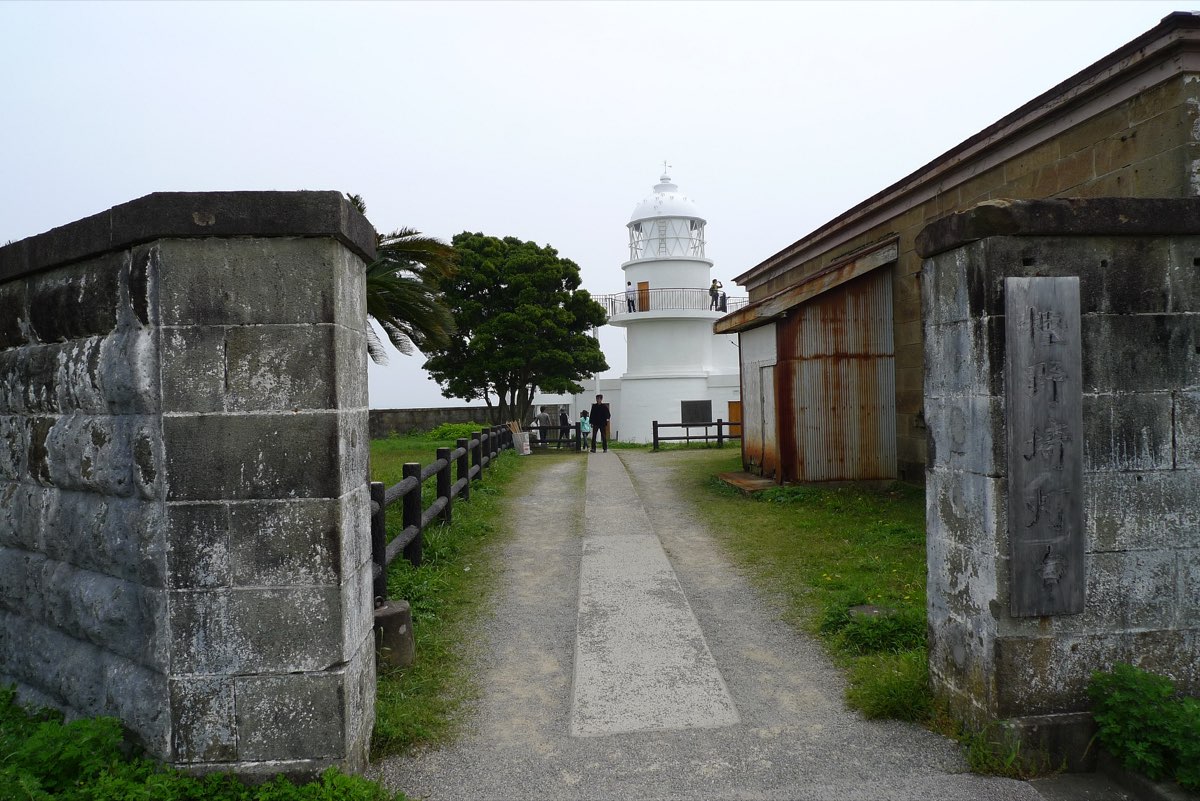
On the night of September 16, 1890, the Ottoman warship Ertuğrul ran onto a reef off Kashinozaki, at the eastern tip of Ōshima island in today's Kushimoto, Wakayama Prefecture, and sank in a typhoon. Most of the people on board lost their lives. The people of Ōshima rescued the survivors and cared for them.
This article describes the voyage and the disaster, the rescue on the island, and how the event has been remembered in Japan and Turkey since.
A mission from Istanbul
According to a Cabinet Office bulletin, court relations between the Ottoman Empire and Japan began after a Japanese prince, Komatsu Akihito, visited Istanbul in 1887. In 1889 Sultan Abdülhamid II sent the warship Ertuğrul to Japan to present a decoration to the Meiji Emperor. Wakayama Prefecture describes the ship as carrying the first Ottoman goodwill mission to Japan.
A report by the Cabinet Office's expert panel on passing on the lessons of past disasters records that the ship left Istanbul on July 14, 1889, and reached Yokohama on June 7, 1890, about eleven months later, after long unplanned stops at Suez and Singapore. On June 13, the envoy Osman Pasha was received by the Meiji Emperor and presented the sultan's letter and the decoration.
Interpretations differ
The Cabinet Office report also discusses why the old ship was sent so far. Drawing on research by the historian Komatsu Kaori, it argues that a main aim was to make a show of the Ottoman caliphate's presence to Muslim communities at ports along the way, such as Bombay, Colombo and Singapore, rather than only to carry out court courtesies. This is the Cabinet Office report's view; other explanations, such as a training cruise or treaty talks, have also been given.
The stay in Japan was longer than planned. According to the Cabinet Office bulletin, because of an outbreak of cholera, the Ertuğrul could only leave for home on September 15, 1890.
The night of September 16
Off the Kii Peninsula, the ship was caught by a typhoon moving north and could no longer be steered. The report states that at about 9:30 p.m. on September 16 it ran onto a reef called Funagōra below Kashinozaki lighthouse. The engine exploded, the ship broke apart and it sank.
Sources give different figures for the dead. Wakayama Prefecture states that 587 people lost their lives and that 69 were rescued.
The Cabinet Office report explains that the exact number of dead is unknown, because Ottoman records disagree on how many people were on board, and it gives about 500 dead and 69 survivors. The report adds that every survivor reached Ōshima by his own efforts.
The rescue on Ōshima
Kashinozaki lighthouse had been lit in 1870. According to the report, it was built by the British engineer Brunton and was the oldest stone lighthouse on Honshu; the present tower is the second one.
In the darkness, some survivors climbed the steep cliffs toward the light. The two lighthouse staff gave them first aid at once and sent word to the head of Kashino, the nearest settlement. By that night, ten survivors were sheltered at the lighthouse.
The village head of Ōshima, Oki Amane, received the news at 10:30 the next morning. According to the Cabinet Office bulletin, he sent messengers to the district office and to the prefectural government, called three doctors living on the island, and reached the scene at 11:30. He then organized villagers to search for survivors and care for the injured.
Survivors were moved to Dairyūji temple in Kashino, and some to the Kashino school. On the 18th, 45 who could not walk were taken by boat to Renshōji temple in another part of the island.
Wakayama Prefecture describes the islanders' rescue as devoted. It states that the story of the rescue has been passed down among the people of Turkey since then.
Oki also sent two surviving officers by ship to Kobe to report the disaster. The German warship Wolf, then in Kobe, reached Ōshima early on September 20, took most of the survivors on board, and returned to Kobe the next day. There the 69 survivors were cared for at the Wada-misaki disinfection station.
On the island, the search for the dead continued. According to the report, by October 7, 251 bodies had been examined and buried on Ōshima and on the opposite shore. The body of the envoy Osman Pasha was never found.
Oki chose a burial ground roughly halfway between the Funagōra reef and the lighthouse. Wakayama Prefecture writes that the victims are said to have been buried on the hill at Kashinozaki overlooking the reef, in the presence of a surviving officer.
The voyage home
Japanese newspapers reported the disaster and collected donations. After an editorial in the Jiji Shinpō newspaper on September 24 called for the survivors to be returned in Japanese warships, the government decided on the 26th to send two warships, Hiei and Kongō.
The report records that the two ships left Kobe with the survivors on October 11, 1890. On December 27 they arrived near the Dardanelles but were refused entry to Istanbul under the Treaty of Berlin, so they handed the survivors over to an Ottoman warship in a bay farther south. The Japanese ships were later allowed to enter Istanbul on January 2, 1891.
A journalist of the Jiji Shinpō, Noda Shōtarō, sailed on the Hiei to deliver the donations his newspaper had collected. According to the Cabinet Office bulletin, the Ottoman side asked him to stay, and he remained in Istanbul for about two years.
Remembering the disaster
Over the following decades, the people of Ōshima held memorial services. The Cabinet Office report traces how the way the disaster was told changed over time.
In 1937 a new monument, arranged by the Turkish ambassador, was unveiled at the Kashinozaki cemetery. The report states that from about this time the incident began to be told not as a disaster lesson but as a foundation for diplomatic and economic relations. After diplomatic relations were restored in the early 1950s, it was told as a symbol of friendship on a larger scale than before the war.
Today Wakayama Prefecture calls the Ertuğrul's visit to Japan and its wreck the starting point of friendship between Japan and Turkey. It presents the event together with the evacuation of Japanese citizens from Tehran by Turkish aircraft in 1985, during the Iran–Iraq War. Kushimoto became a sister town of Yakakent in Turkey in 1964.
The Cabinet Office bulletin draws a different lesson from the disaster. It points out that in disasters foreigners become victims just as citizens do. It notes that lessons learned in the care of foreign victims were applied in later disasters, and that the idea of raising donations for foreign victims took root in Japanese society.
Places to visit
In 2021 the national government designated Kashinozaki Lighthouse and the Ertuğrul shipwreck remains as a Historic Site. The site includes the lighthouse, the Funagōra reef, the landing place where survivors are said to have swum ashore, and the cemetery where the victims were buried.
A memorial to the victims stands at Kashinozaki, and a memorial ceremony was held there on September 16, 2025, the 135th anniversary.
The Turkish Memorial Museum in Kushimoto opened at Kashinozaki in 1974. It displays a model of the Ertuğrul, relics, photographs, and the diary of village head Oki, which the Cabinet Office bulletin calls a first-class record of a Meiji-era sea rescue. Check the official website of Kushimoto Town for opening hours before visiting.
Sources
- トルコと日本 友好の原点は和歌山ですWakayama Prefecture
- 和 vol.58 エルトゥールル号Wakayama Prefecture
- 樫野埼灯台及びエルトゥールル号遭難事件遺跡Agency for Cultural Affairs (Cultural Heritage Online)
- 過去の災害に学ぶ(第8回)明治23年(1890)エルトゥールル号事件(広報ぼうさい No.34)Cabinet Office of Japan
- 1890 エルトゥールル号事件 報告書 第2章 「エルトゥールル号事件」内閣府 災害教訓の継承に関する専門調査会
- 1890 エルトゥールル号事件 報告書 第4章 「エルトゥールル号事件」後の防災体制と災害教訓伝承内閣府 災害教訓の継承に関する専門調査会
- 1890 エルトゥールル号事件 報告書 付8 災害概略シート内閣府 災害教訓の継承に関する専門調査会