In the 1870s and 1880s, people across Japan began to demand an elected national assembly and a constitution. This campaign is known as the Freedom and People's Rights Movement. Kōchi, the former Tosa domain, stood at its center, and the movement led by the Tosa society Risshisha spread so widely that people said, "Freedom comes from the mountains of Tosa."
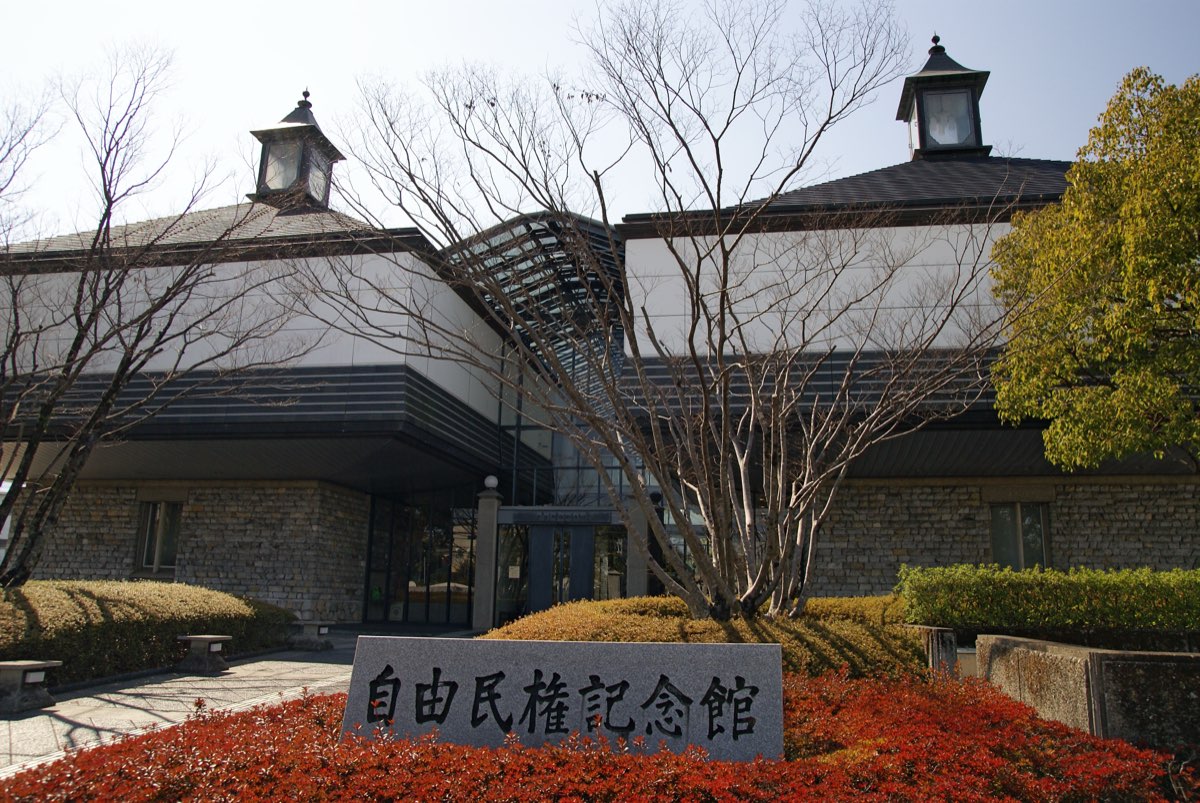
Kōchi City runs a museum devoted to this history, the Kōchi City Freedom and People's Rights Museum. It describes itself as a history museum specializing in the movement in Tosa and in the modern era. This article follows the movement through the museum's materials and the online exhibitions of the National Diet Library.
A Tosa samurai in the new government
Itagaki Taisuke, whom Kōchi City calls the father of the Freedom and People's Rights Movement, was born in 1837 into an upper-ranking samurai family of the Tosa domain. The museum gives his birthday as the 17th day of the 4th month of Tenpō 8 (lunar calendar), and explains that his family name was Inui until he changed it during the Boshin War.
For his service in the Boshin War of 1868, Itagaki was promoted to a rank equal to that of a domain elder (karō-kaku). In the new Meiji government he became a councillor (sangi). In the 1873 dispute in the government over Korea known as seikanron, he sided with Saigō Takamori and others and lost, and in 1874 he returned to Tosa, according to a Kōchi City profile.
The museum notes an earlier sign of his thinking. In 1870, as a senior official of the Kōchi domain, Itagaki wrote that people's worth does not depend on class and that they should be given the right of freedom.
The museum adds that the same text says it must not be taken as needlessly lowering the samurai and raising commoners, so it does not fully express equality for all. Even so, the museum considers it an innovative idea for its time.
The petition of 1874
On January 12, 1874, Itagaki joined Gotō Shōjirō, Soejima Taneomi, Etō Shinpei and others in forming a group called the Aikoku Kōtō. The National Diet Library calls it Japan's first political party. On January 17 its members submitted a petition calling for an elected assembly to the Sa-in, the government body that deliberated on legislation.
According to the museum, the petition sharply criticized rule by a small group of officials and argued that an elected assembly was the only way to prevent the collapse of the country. It based the people's claim to take part in government on their duty to pay taxes.
The next day, the full text appeared in the Nisshin Shinjishi, a newspaper run by the Briton John Reddie Black. Both the museum and the National Diet Library describe this as the starting point of the Freedom and People's Rights Movement. The Aikoku Kōtō itself, the library notes, disappeared within a few months.
The Risshisha in Kōchi
Itagaki went home to Tosa and founded the Risshisha with his allies. The museum explains that its founding meeting on April 10, 1874 had to be called off because too few people came. On the 13th of the following month, a meeting attended by both former samurai and commoners was held.
At first the Risshisha opened its office at the former Kaiseikan site in Kutanda. It worked mainly to help former samurai make a living, and it set up a school, the Risshi Gakusha. Its first president was Kataoka Kenkichi, Itagaki's comrade from the Boshin War.
From 1877, the museum says, the Risshisha carried on a full-scale movement for people's rights. During the Satsuma Rebellion of that year, the National Diet Library explains, one faction inside the society planned to take up arms in sympathy. Another faction, including Ueki Emori, opposed armed revolt and drafted a memorial to the emperor instead.
The memorial criticized the government's policies and called for an elected assembly and constitutional government. Kataoka submitted it at the emperor's temporary residence in Kyoto on June 9, 1877, but it was rejected a few days later as disrespectful.
After the rebellion, the library says, armed opposition ended and the movement turned to speech. The Risshisha revived the Aikokusha, an earlier association founded by Itagaki.
At its meeting in March 1880, delegates from many regions formed the League for Establishing a National Assembly. Kataoka and Kōno Hironaka tried to present its petition to the government, but it was not accepted.
In November 1880 the League decided that its member groups would bring draft constitutions. Ueki Emori, who according to the museum had joined the Risshisha in 1875 after hearing Itagaki speak, was the society's drafting member.
He wrote a draft that, according to the National Diet Library, proposed a federal state on the American and Swiss model and protected people's rights in detail. The library finds in it a liberal and democratic character.
Meetings, newspapers and restrictions
In Kōchi the movement was also a social scene. The museum says gatherings called konshinkai were held often across the prefecture and are said to have peaked between 1880 and 1884. People gave speeches, held flag-snatching contests and carried banners with the word "freedom" and the names of their societies.
In 1881 a scandal over the sale of government property in Hokkaidō caused a public uproar. The National Diet Library explains that the government cancelled the sale, dismissed Ōkuma Shigenobu, and issued an imperial edict that a national assembly would open in 1890. That same year Itagaki became head of the new Liberal Party, the Jiyūtō.
The museum relates that Itagaki heard the news on October 13, 1881, in the middle of a speech meeting in Niigata during a speaking tour of northeastern Japan. He is said to have told those around him, "The road ahead is still long. Do not rejoice."
The government also restricted speech. The museum lists a libel law and a press law from 1875 and an 1880 law on public meetings that required political gatherings and societies to notify the police and obtain approval.
After the Kōchi Shinbun was banned on July 14, 1882 for an editorial criticizing a constitution granted by the emperor, local activists held a mock "funeral" for the newspaper on July 16. The museum says the register lists 2,727 mourners.
"Itagaki may die, but freedom will not"
On April 6, 1882, after a gathering at the Chūkyōin in Gifu, Itagaki was attacked by a man with a dagger and injured. A Kōchi City profile says that newspapers reported the words he spoke, "Itagaki may die, but freedom will not die," and that the phrase became the watchword of the movement and made him its hero.
Interpretations differ
The museum is careful about the famous line. It says there are various accounts of what he said and that the truth is unknown. At least the government's own records of the time state that he said these words.
The end of the Risshisha and after
In 1882 the Risshisha handed its political work to the Kainan Jiyūtō and became a friendly society, and it dissolved on March 20, 1883, the museum explains. According to Kōchi City, the movement, through many twists and turns, opened the way to the promulgation of the constitution in 1889 and the opening of the national assembly.
Itagaki later served as Home Minister in the cabinets of Itō Hirobumi and Ōkuma Shigenobu. He retired from politics in 1900, devoted his last years to social reform, and died in 1919, aged 83 by the traditional Japanese count.
Places to visit
The Kōchi City Freedom and People's Rights Museum, on Sanbashi-dōri in Kōchi City, introduces the movement in Tosa and the people involved through photographs, documents, satirical cartoons, models and films. Please check the museum's official information for opening hours.
In Kōchi City, a stone marking the site of the Risshisha stands in Kōchi Central Park. The museum's guide also points to the Kaiseikan site in Higashi-Kutanda Park, a city historic site where the Risshisha and its school were placed in 1874. A sign at the western entrance of the path up Mount Godai explains the "newspaper funeral."
Sources
- 板垣退助ブック 〜言論で国を動かそうとした男〜(解説)Kōchi City Freedom and People's Rights Museum
- 自由民権運動の父 高知市立自由民権記念館(広報)Kōchi City
- 1-9 民撰議院設立の建白(史料にみる日本の近代)National Diet Library
- 1-12 立志社の国会開設請願(史料にみる日本の近代)National Diet Library
- 1-13 国会期成同盟の請願(史料にみる日本の近代)National Diet Library
- 1-14 植木枝盛の憲法構想(史料にみる日本の近代)National Diet Library
- 2-3 明治14年の政変(史料にみる日本の近代)National Diet Library