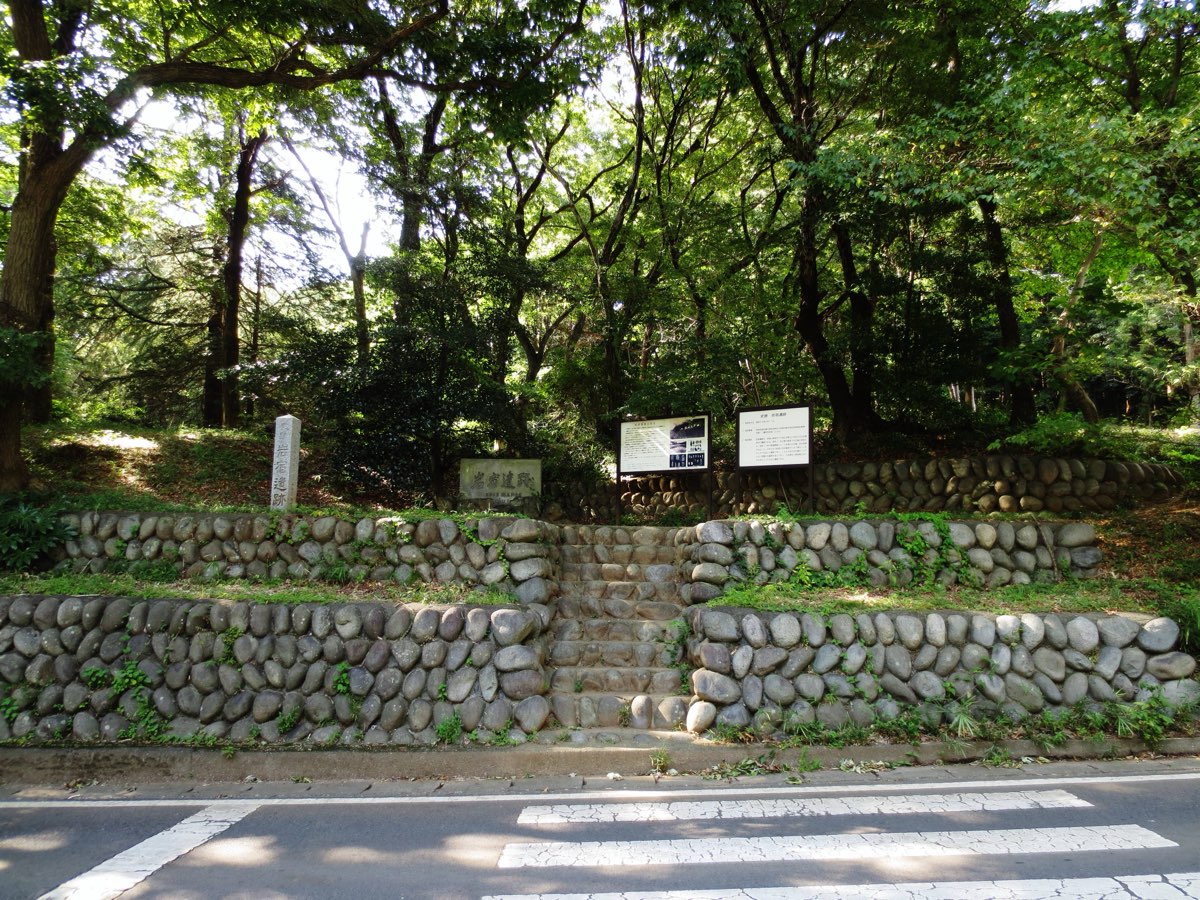
In 1949, at a road cutting through a low hill in Gunma Prefecture, an excavation showed that people had lived in the Japanese archipelago long before the Jōmon period. The place was Iwajuku, in today's city of Midori.
According to Midori City, the work there overturned the view that no people lived in the archipelago in the Paleolithic. It pushed the oldest human history of Japan back from a few thousand years to tens of thousands of years.
A layer nobody dug into
The Iwajuku Museum explains the background. Until around the time of the Second World War, archaeologists who reached the red soil called the Kanto loam treated it as jiyama, the natural subsoil, and dug no further.
They believed that the Jōmon people, who used pottery, were the first inhabitants of Japan. The loam, formed from volcanic ash more than 15,000 years old, was said to belong to a time when people could not live there.
The site lies where two small hills, Kotohirayama and Inariyama, meet, in Kasakake-chō Asami, Midori. The national cultural properties database describes it as a small, isolated hill southeast of Mount Akagi, with a town road running through the low saddle between its parts.
Aizawa Tadahiro's finds
The man who first noticed stone tools there was Aizawa Tadahiro. According to Gunma Prefecture, he was born in 1926 in Tokyo and moved to Kiryū, Gunma, in 1937. While making his living as a peddler, he studied sites around the foot of Mount Akagi as an amateur archaeologist.
The Iwajuku Museum says that in 1946, passing through the cutting, Aizawa found stone tools in the exposed red loam. He went back again and again and kept finding tools in the loam, but never any pottery.
The national database words this with a hedge: it says Aizawa is said to have first found stone tools in the cutting around 1946.
In the summer of 1949 he found an obsidian spear point that, in the museum's words, no one could doubt. Gunma Prefecture calls this find the starting point for recognising that the archipelago had a Paleolithic period.
Which moment counts as "the discovery" depends on how the story is told. The sources used here describe Aizawa's first finds of 1946, his spear point of 1949, and the excavation that he then carried out with Meiji University.
The 1949 excavation
News of the spear point reached scholars in Tokyo, and Aizawa and Meiji University decided to excavate together. On 11 September 1949 the team stood on the hill at Iwajuku and dug into the Kanto loam, where they confirmed stone tools.
According to a 1998 paper by Oda Shizuo in the bulletin of the Gunma Museum of Natural History, this preliminary survey, led by Sugihara Sōsuke of Meiji University, ran from 11 to 13 September. A full excavation followed in October 1949, and a second one in April 1950.
The survey named the north side of the road cutting Point A and the south side Point B. At Point A, the team found two groups of stone tools in different layers.
The lower group, called Iwajuku I, lay about 1.5 metres below the surface in a dark band of loam. According to the national database, it included two oval stone axes, scrapers, blade-like flakes, and cores, made mostly of shale, together with natural cobbles and charred chestnut wood.
The upper group, Iwajuku II, was marked by knife-shaped stone tools of agate, shale, obsidian, and andesite. Oda counts 29 tools from Iwajuku I and 175 from Iwajuku II in the 1949 excavation at Point A.
The museum explains why the results mattered. Jōmon pottery, then thought to be the oldest, was found at Point C, a little way off, but it lay in black soil above the loam. The stone tools in the loam at Points A and B were therefore clearly older, and because no pottery came with them, they were thought to belong to a different age from the Jōmon.
How old are the tools?
The age of the two groups has been estimated in different ways over time. The national database notes a layer of volcanic ash, known as AT, at the top of the dark band, and says Iwajuku I is thought to be older than 20,000 years.
Oda's 1998 paper gives about 28,000 to 30,000 years ago for Iwajuku I and about 18,000 to 20,000 for Iwajuku II. The Iwajuku Museum now gives at least about 35,000 years ago for Iwajuku I and about 25,000 for Iwajuku II.
According to the museum, finding two groups in different layers suggested from the very start that the period had distinct cultural stages and lasted a long time.
From doubt to acceptance
After the excavation ended and newspapers reported it, the finds were announced as proof that Japan had a "Paleolithic." According to the museum, some researchers still doubted that people had lived in Japan more than 10,000 years ago.
Within a few years, however, sites of the same age were found across the country, and the period's existence was no longer in doubt. About 70 years after the excavation, the museum says, some 10,000 such sites were known.
In 1979 Iwajuku was designated a national historic site. The national database gives the reason: it yielded tools among the very oldest widely accepted as certainly made by people, and it was the first site to prove that Japanese culture goes back to the Paleolithic.
The museum calls this era the "Iwajuku period," after the site where its study began. Midori City notes that some researchers use the same name for Japan's Paleolithic.
Research at Iwajuku continued. A dig next to the site in 1987 again found two groups of tools. In 2001, at the neighbouring Iwajuku II site, about 500 tools were found, including points like the one Aizawa had found; the museum says they can be called proof that an "Iwajuku III" industry, a mystery since the 1949–50 excavations, really existed there.
New finds at Point F in 2015 and 2016 showed the site extended further, and Point F was added to the historic site in 2017.
Interpretations differ
Not every find has been accepted. In 1970 and 1971, excavations led by Serizawa Chōsuke of Tohoku University searched for tools older than Iwajuku I and found pieces of quartzite that were named "Iwajuku 0." Oda writes that whether these are really tools remains an open question, and the museum says many researchers question them and the debate continues.
Aizawa's collection
Aizawa died in 1989. In 2022 about 43,000 items connected with him were donated to Midori City by the Aizawa Tadahiro Memorial Hall.
In August 2024, 39,370 of them, the archaeological material, were registered as a national Registered Tangible Cultural Property. Announcing the decision in March 2024, Gunma Prefecture said it was the first registered cultural property of this kind, covering objects rather than buildings, in the prefecture.
Visiting Iwajuku today
The Iwajuku Museum is at the site in Midori. Its permanent galleries were renewed in October 2026, and at their centre the museum displays the obsidian spear point that Aizawa found in 1949.
At Point A, where the first tools were confirmed, there is a stone monument. At Point B, the Iwajuku Dome lets visitors see the Kanto loam and watch a video about the period.
For opening hours and fees, check the museum's official website before you go.
Sources
- 岩宿遺跡についてMidori City Iwajuku Museum
- 岩宿遺跡(史跡)Midori City Board of Education, Cultural Properties Division
- 岩宿博物館 常設展示(令和8年10月リニューアル)Midori City Iwajuku Museum
- 岩宿遺跡(国指定文化財等データベース)Agency for Cultural Affairs (Bunka Isan Online)
- 国登録有形文化財(美術工芸品)の新規登録についてGunma Prefecture, Cultural Properties Protection Division
- 群馬県岩宿遺跡の旧石器資料―鹿間時夫コレクション①―Gunma Museum of Natural History