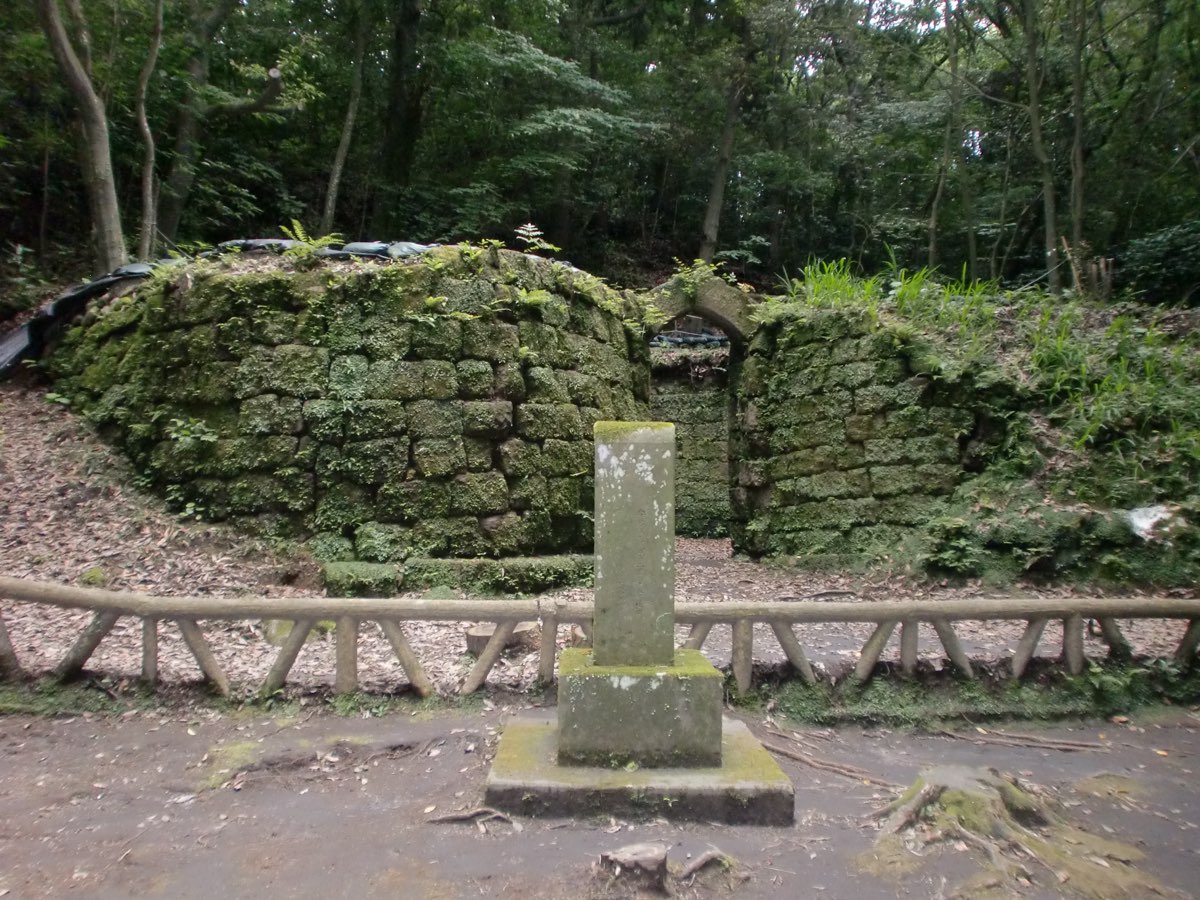
In the last years of the Edo period, the Satsuma domain in southern Kyushu tried to build Western-style industry on its own soil. At the center of this effort was the Shūseikan, a group of factories beside the Shimazu family's villa at Iso, in what is now Kagoshima City.
Kagoshima City dates the start of the Shūseikan project to 1851. In 1865, the same domain secretly sent nineteen young men to Britain to study and observe Europe. Today the Shūseikan's remains are part of a World Heritage property, and a museum on the coast remembers the students.
A domain at Japan's southern gateway
The World Heritage council for the Meiji industrial sites describes Satsuma as standing at Japan's southern gateway. After the Qing dynasty was defeated in the Opium War, the council says, Satsuma's sense of crisis about coastal defense grew, and it tried casting cannon and building steamships ahead of other domains.
Kagoshima City adds that Satsuma was open to the outside world in part because of its trade with Ryukyu. According to the city, the lord Shimazu Nariakira saw the need to strengthen the domain's economy and military after the Opium War, and began the Shūseikan project.
Nariakira became lord of Satsuma in 1851 (Kaei 4). According to the council, he had the three-masted Western-style sailing ship Shōheimaru built with Japanese shipbuilding techniques, and in 1855 his retainers, working from translated manuals, built the Unkōmaru, which the council calls Japan's first steamship.
The Shūseikan factory complex
According to the Agency for Cultural Affairs, the project began with a reverberatory furnace, a furnace for melting iron to cast cannon, set up inside the Iso residence in the winter of 1852 (Kaei 5). The Shoko Shuseikan Museum says Nariakira cleared a bamboo grove next to the Sengan-en garden for it.
The first furnace, built from Dutch books, failed: Kagoshima City says it could not keep the inside hot enough. The second succeeded by applying Satsuma's own skills, such as the precise stonework of its stone bridges and the techniques of Satsuma pottery. The surviving foundation belongs to this second furnace, built in 1857.
Around the furnace grew a blast furnace, a boring mill for cannon, and workshops for glass, ceramics, farm tools, swords, and more, and experiments were made with gas and electricity. Kagoshima City lists products including Satsuma cut glass (Satsuma kiriko), Satsuma ware, telegraph equipment, gas lamps, cloth, and thread.
The museum says that at its peak up to 1,200 workers were employed there, in what it calls the largest modern factory complex in Japan at the time. In the museum's view, the project's reach beyond cannon and ships into many industries shows that Nariakira also aimed at people's prosperity.
The factories needed power and fuel. In 1852, according to the council, Nariakira had a new channel built from an existing canal, carrying water about 7 kilometers to the Shūseikan's waterwheels. In 1858, kilns were built at Terayama, about 5 kilometers away, to make white charcoal (hakutan), which burns with strong heat.
War, and a factory of stone
Nariakira died in 1858, and the Shoko Shuseikan Museum says the project was scaled down or stopped. In 1862, near the village of Namamugi, Satsuma retainers escorting the procession of Shimazu Hisamitsu attacked a party of British travelers, according to the Satsuma Students Museum.
The national land ministry says this incident led to the Anglo-Satsuma War of 1863, when a British squadron came to Kagoshima Bay. According to the Agency for Cultural Affairs, the Shūseikan burned in the fighting, except for the reverberatory furnace.
The ministry says the war convinced Satsuma that it needed British science and technology. Kagoshima City says Hisamitsu, Nariakira's younger brother and father of the new lord, recognized the need for modernization, and after peace was made the domain imported British machinery and invited engineers to revive the Shūseikan.
The first new building was a machine factory. The Agency for Cultural Affairs records that work began in the tenth month of 1864 (Genji 1) and that the machinery was installed by the fourth month of 1865 (Keiō 1). The museum says it held a 25-horsepower steam engine and modern machine tools, at first for maintaining Western-style ships.
The long single-story building is made of welded tuff, a stone common in southern Kyushu, and was called the "Stone Home" from the start. Kagoshima City calls it the oldest surviving modern factory building in Japan.
Nineteen young men leave from Hashima
Godai Tomoatsu, a Satsuma retainer, had been taken prisoner by the British during the war. According to the Satsuma Students Museum, while in Nagasaki he came to know the British merchant Thomas Glover, and around June 1864 he proposed to the domain that it send students abroad, buy new machinery, and hire foreign engineers.
The museum says this proposal led to the decision. Four inspectors and fifteen students were chosen, most from the domain's school of Western learning, the Kaiseijo. Travel abroad was forbidden, so their official orders spoke of a survey around the islands of Koshiki and Ōshima, and each was given an alias.
The prefectural Reimeikan history center dates these orders to the first month of 1865 by the lunar calendar. With Glover's help, the national land ministry says, nineteen envoys and students were sent in all.
The group waited for more than two months at Hashima, on the coast of the Satsuma Peninsula, studying as they waited. In April 1865 they sailed from Hashima, now part of Ichikikushikino City, on the steamer Australian; the museum dates the departure to April 17.
In Britain, Kagoshima Prefecture notes, University College London still keeps a register of the Satsuma students, and a memorial stone stands there. The ministry says the students later served as senior officials in the Meiji government.
According to the museum's profiles, Terashima Munenori became Lord of Foreign Affairs and worked on treaty revision, and Mori Arinori became Japan's first Minister of Education. Godai became a businessman in Osaka and the first head of its chamber of commerce.
Murahashi Hisanari led the government project to build a brewery in Sapporo, the forerunner of Sapporo Beer. Nagasawa Kanae, who was only thirteen when he left, settled in the United States and made wine in California, where he was called the "grape king."
Machines from Manchester
According to Kagoshima Prefecture, Godai and others signed a contract in Manchester to buy cotton-spinning machinery and to have spinning engineers sent to Japan. The national land ministry says that in 1867 the Kagoshima Spinning Mill, which it calls Japan's first Western-style mechanical spinning mill, began operating at the Shūseikan.
The British engineers who came to teach at the mill lived in a house built for them, which Kagoshima City dates to 1867 (Keiō 3); the Shoko Shuseikan Museum gives 1866. Kagoshima City describes it as one of the earliest Western-style wooden buildings in Japan, with colonial-style verandas but designed in Japanese units of measurement.
According to the Agency for Cultural Affairs, the Shūseikan project ended in the ninth month of 1869 (Meiji 2). The museum says the machine factory later passed to the army, the navy, and then the Shimazu family, stopped work in 1915, and opened in 1923 as the Shoko Shuseikan Museum.
On July 5, 2015, the World Heritage Committee decided to inscribe "Sites of Japan's Meiji Industrial Revolution: Iron and Steel, Shipbuilding and Coal Mining." Its components in Kagoshima are the former Shūseikan, including the machine factory and the engineers' residence, the Terayama charcoal kiln, and the Sekiyoshi water channel.
At the inscription, Japan told the Committee it would take measures allowing an understanding that "there were a large number of Koreans and others who were brought against their will and forced to work under harsh conditions in the 1940s at some of the sites," and that it had implemented a requisition policy during World War II. The statement covers the property as a whole, which has 23 component parts in eight prefectures, and does not name the sites it means.
The Foreign Ministry notes the statement does not acknowledge illegal "forced labour." A 2022 government report says requisitioned workers from the Korean Peninsula "were only present at some sites."
Places to visit
The Shoko Shuseikan Museum stands in the former machine factory beside the Sengan-en garden in Yoshino-chō, Kagoshima City, with the remains of the reverberatory furnace nearby. The engineers' residence, known locally as the Ijinkan, is about a five-minute walk from JR Senganen Station, according to Kagoshima City.
At Terayama, part of the kiln collapsed in heavy rain in 2019 and again during repairs in 2023. The council says the area around it is fenced off, though the nature trail is open. The intake of the Sekiyoshi channel, which took water from the Inari River, also survives.
At Hashima, Ichikikushikino City opened the Satsuma Students Museum in July 2014. Check each site's official website for opening times, fees, and access before visiting.
Sources
- 旧集成館 附寺山炭窯跡 関吉の疎水溝Agency for Cultural Affairs (Cultural Heritage Online)
- かごしま近代化産業遺産 協働行動計画Kagoshima City
- 旧鹿児島紡績所技師館(異人館)Kagoshima City
- 敵に勝つには敵から学べ(九州と諸外国の交流ストーリー集2019)Ministry of Land, Infrastructure, Transport and Tourism (Kyushu Regional Development Bureau)
- 「明治日本の産業革命遺産 製鉄・製鋼、造船、石炭産業」の概要Cabinet Secretariat (Office for World Heritage of Industrial Heritage)
- 英国との交流(資料)Kagoshima Prefecture
- 今日は何の日?(1月)Kagoshima Prefecture (Reimeikan, Kagoshima Prefectural Center for Historical Material)
- 旧集成館(ストーリー&サイト 鹿児島)World Heritage Council for the Sites of Japan's Meiji Industrial Revolution
- 寺山炭窯跡(ストーリー&サイト 鹿児島)World Heritage Council for the Sites of Japan's Meiji Industrial Revolution
- 関吉の疎水溝(ストーリー&サイト 鹿児島)World Heritage Council for the Sites of Japan's Meiji Industrial Revolution
- 世界文化遺産(尚古集成館)Shimadzu Limited (Shoko Shuseikan Museum)
- 尚古集成館についてShimadzu Limited (Shoko Shuseikan Museum)
- 薩摩藩英国留学生の歴史Satsuma Students Museum (Ichikikushikino City)
- ようこそ(薩摩藩英国留学生記念館)Satsuma Students Museum (Ichikikushikino City)
- Welcome! (The Satsuma Students Museum, English page)Satsuma Students Museum (Ichikikushikino City)
- 「明治日本の産業革命遺産 製鉄・製鋼,造船,石炭産業」のユネスコ世界遺産一覧表への記載決定(第39回世界遺産委員会における7月5日日本代表団発言について)Ministry of Foreign Affairs of Japan
- State of Conservation Report: Sites of Japan's Meiji Industrial Revolution: Iron and Steel, Shipbuilding, and Coal Mining (Japan) (ID: 1484)Cabinet Secretariat, Government of Japan
- OUV:世界遺産としての価値(明治日本の産業革命遺産 製鉄・製鋼、造船、石炭産業)World Heritage Council for the Sites of Japan's Meiji Industrial Revolution
- 世界遺産「明治日本の産業革命遺産 製鉄・製鋼、造船、石炭産業」とはFukuoka Prefecture