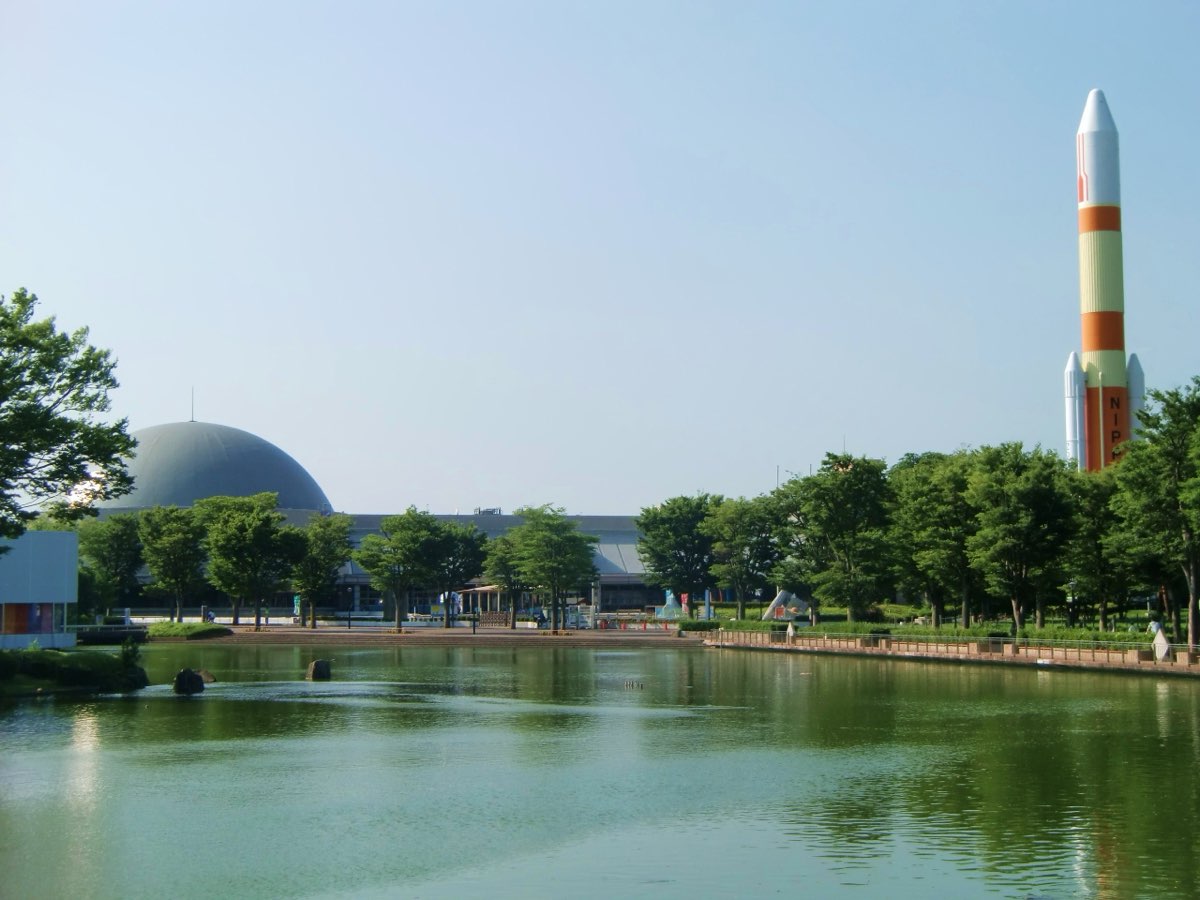
About 60 kilometers northeast of Tokyo lies Tsukuba Science City, a city built for research and education. Tsukuba City describes it as a national project with two aims: to ease overcrowding in Tokyo by moving national research institutions out of the capital, and to create a base for high-level research and education.
The decision to build it in the Tsukuba district came in 1963. This article follows how the Tsukuba district became a city of research institutions, a university, and planned neighborhoods, and what visitors can see there today.
Choosing Tsukuba
According to Tsukuba City, the site was chosen from four candidates: the foothills of Mount Fuji, Akagi, Tsukuba, and Nasu. In September 1963 the cabinet approved building the research and education city in the Tsukuba district.
The Japan Housing Corporation, now the Urban Renaissance Agency, was to buy and prepare the land. The new city was launched as a national project to ease overcrowding in Tokyo, promote science and technology, and improve higher education.
Tsukuba City lists two purposes for building it. The first was a base for high-level research and education, centered on national research institutions moved from Tokyo and its surroundings and a newly founded University of Tsukuba, together with a balanced "garden city."
The second was to help relieve excessive population concentration in the built-up areas of the capital region. This was to be done by moving national research and education institutions that did not need to be in Tokyo.
Land, law, and a long list of institutions
The plan as first announced was to build the city by buying 4,000 hectares outright. According to Tsukuba City, opposition movements and other factors led to a different approach, and the city was developed within the present area of about 2,700 hectares.
The National Land Agency coordinated the work, and the Japan Housing Corporation drew up the master plan and built the basic infrastructure. Four methods were combined: a government-facilities project for the research and education institutions (about 1,460 hectares), and new residential development by full purchase (about 260 hectares).
The other two were land readjustment, in which landowners gave up part of their land for public use (about 1,100 hectares), and parks (about 30 hectares).
The University of Tsukuba's own chronology records the steps that followed. In September 1967 the cabinet approved a list of 36 institutions to be moved to Tsukuba, including Tokyo University of Education.
In May 1970 the Tsukuba Science City Construction Act was passed. In May 1972 the cabinet decided which institutions, including a new university, would be newly established or moved to the city.
In August 1972 the cabinet agreed to bring the relocation of government bodies forward and complete it by fiscal 1975. The act also required two plans, one for the central research and education district and one for the surrounding district.
A university and the first laboratories
The University of Tsukuba was established in October 1973 by an act amending the law on national schools. Iwasaki Yōichi, a later president of the university, explained in a lecture published by the Ministry of Land, Infrastructure, Transport and Tourism that it grew out of Tokyo University of Education.
In his words, the move to Tsukuba was the occasion for a fundamental reform, and the university opened in 1973 as a comprehensive university.
Other institutions arrived in the same years. JAXA, Japan's space agency, states that its Tsukuba Space Center, set in one part of the science city, opened in 1972.
According to Tsukuba City, by March 1980 the 43 research and education institutions originally planned had completed their move. The city regards that point as the completion of the city's basic form.
Living in a new town
Iwasaki, who came to Tsukuba in 1975, recalled that the main avenues did not yet run through and the roads were unpaved. The catchphrase of the time, he said, was "rubber boots and starry skies."
In his account, Higashi-Ōdōri avenue was finally completed through in 1977 and the main east-west road in 1979. Residents had to go all the way to the city of Tsuchiura to shop until the Tsukuba Center Building opened in 1983 and a department store in 1985.
He also recalled that in the early years after the move, newcomers and the people who had long lived in the surrounding area were referred to as "new residents" and "old residents," and had few chances to communicate. In his view, it took time before the two groups could mix naturally.
Expo '85 and after
In 1985 the science city hosted the International Exposition, Tsukuba, Japan, known as Expo '85. Its theme was "Human, Dwelling, Environment and Science and Technology."
According to Tsukuba City, the Expo made the name "Tsukuba" known around the world. The Jōban Expressway also opened in 1985, according to Iwasaki's chronology.
In 1987 Tsukuba City was created by a merger of towns and villages. In 2005 the Tsukuba Express railway opened, and Iwasaki noted that it linked the city with Akihabara in Tokyo in as little as 45 minutes.
Today the science city covers the whole of Tsukuba City, about 28,372 hectares. The 2020 census counted about 242,000 people, against a planned population of 350,000.
As of April 2026, Tsukuba City lists 31 national and other research and education institutions in the city. The city's page (updated May 2026) also says that, with private ones, there are about 160 research institutions and more than 14,000 researchers.
The city calls Tsukuba Japan's largest science city, with about 20,000 people engaged in research, and notes that Nobel laureates have come from Tsukuba. A network of pedestrian paths about 48 kilometers long links the research and education district.
Visiting today
The Tsukuba Expo Center was built as a permanent facility commemorating Expo '85. In 1986 it reopened as a science museum.
Today it presents hands-on science and technology exhibits, a corner remembering Expo '85, and a planetarium. The museum describes the planetarium as one of the largest in the world.
At JAXA's Tsukuba Space Center, the exhibition hall "Space Dome" introduces the history and current work of JAXA, with full-size satellites, real rocket engines, and a full-size model of the Kibo experiment module. Guided tours require online reservations.
The Space Center notes that it may close temporarily, so please check each facility's official website before visiting.
Sources
- 筑波研究学園都市のあゆみTsukuba City
- 筑波研究学園都市とはTsukuba City
- 令和5年度 年次報告 1 管理運営関係(1)沿革University of Tsukuba
- 筑波研究学園都市の歴史にみる都市づくりのあり方(国会等の移転ホームページ オンライン講演会)Ministry of Land, Infrastructure, Transport and Tourism
- 筑波宇宙センターJapan Aerospace Exploration Agency (JAXA)
- つくばエキスポセンターについて 概要Tsukuba Expo Center (Tsukuba Science Expo Memorial Foundation)
- 展示フロアガイドTsukuba Expo Center (Tsukuba Science Expo Memorial Foundation)
- 筑波宇宙センター見学のご案内Japan Aerospace Exploration Agency (JAXA)
- 屋外展示場Tsukuba Expo Center (Tsukuba Science Expo Memorial Foundation)